No products in the cart.
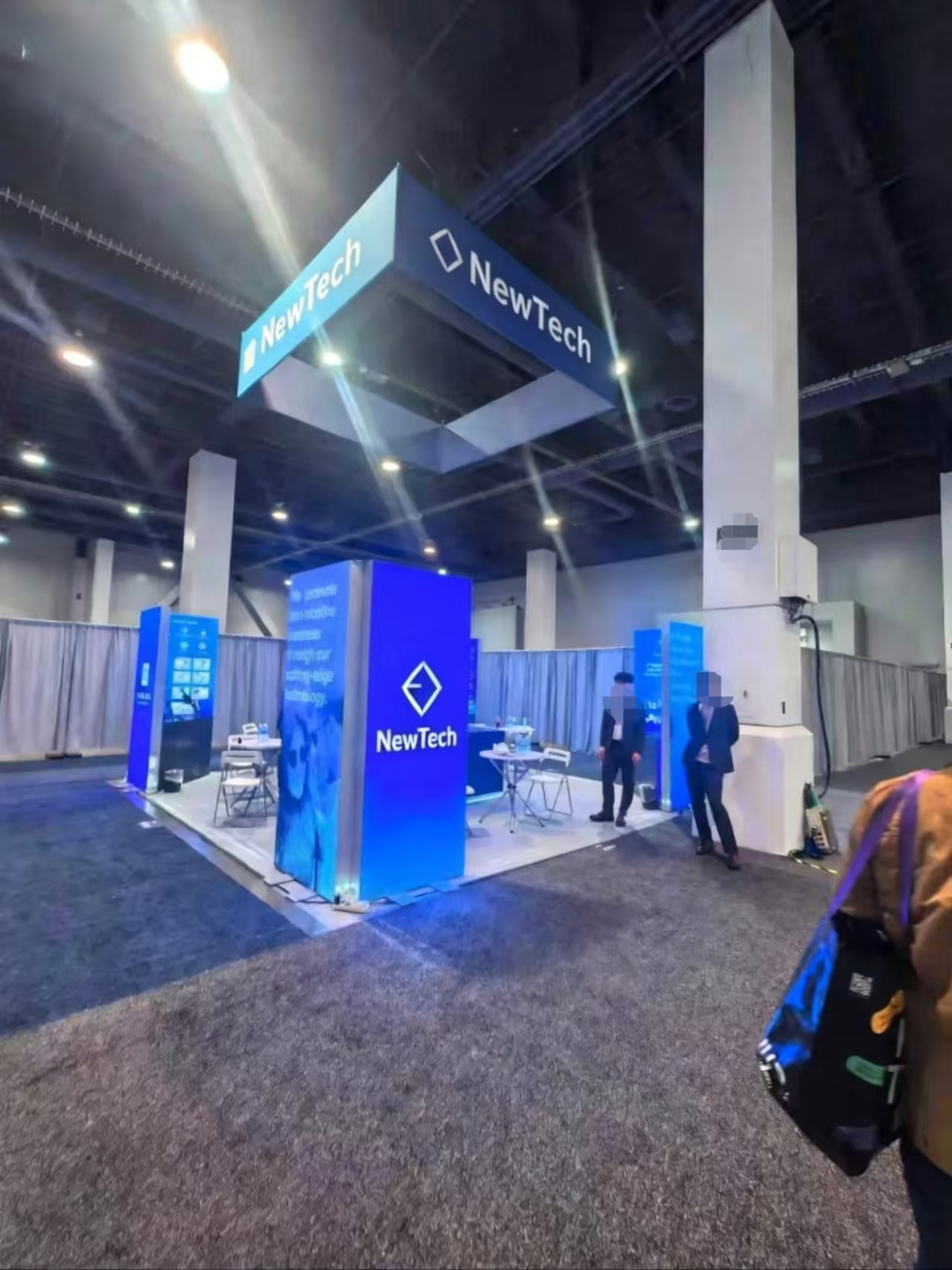
This case study shows a modular exhibition booth built around high-visibility blue graphics, illuminated display towers and a suspended overhead sign. The booth uses vertical structures to create a clear brand boundary while keeping the center space open for visitors, staff movement and quick conversations.
For exhibitors that need a professional presence without a fully custom wooden build, this type of trade show display setup is a practical reference. It combines reusable hardware, replaceable printed graphics and strong visual branding that can be adapted for future shows.
Project Background
An anonymized technology exhibitor needed a booth that could be noticed from multiple aisle directions. Instead of relying only on a backwall, the design used a hanging banner above the booth and several illuminated vertical display elements at ground level. This helped the brand remain visible even when visitors were walking past other stands nearby.
The layout also included a small meeting area with tables and chairs, giving the sales team a place to qualify leads, explain product details and hold short business discussions during the show.
Key Display Elements
- Overhead hanging banner: improves long-distance visibility and helps visitors locate the booth from across the exhibition hall.
- SEG lightbox towers: create bright vertical brand surfaces and make the booth stand out in a dark ceiling environment.
- Fabric graphic walls: deliver large-format messaging while keeping the booth structure lightweight and reusable.
- Open meeting space: keeps the booth approachable and gives staff a practical place to talk with buyers.
- Modular hardware: supports repeat use across different events, with graphics that can be updated for new campaigns.
Why This Layout Works
The strongest part of this booth is the layered visibility. The overhead sign attracts attention from a distance, while the illuminated towers keep the brand clear at eye level. This is useful in crowded trade show halls where many booths compete for the same visitor attention.
The blue color system is also consistent across the hanging sign, vertical towers and side graphics. That consistency makes the booth feel more complete and helps the exhibitor look organized, even when the surrounding hall is visually busy.
Recommended Products for Similar Booths
| Booth structure | 20×20 modular trade show booth or custom island-style booth system |
| Lighting display | SEG lightbox display for illuminated branding and stronger aisle impact |
| Graphic surface | Tension fabric backdrop or fabric display wall with replaceable graphics |
| Overhead visibility | Hanging banner signage for brand location and long-distance recognition |
| Best for | Technology brands, product launches, distributor meetings and exhibitors that need a repeatable booth system |
Setup and Reuse Notes
A booth like this should be planned with the show manual in mind. Hanging signs may require venue approval, height checks and rigging rules. Lightbox structures should be tested before shipment, and fabric graphics should be packed carefully to avoid wrinkles or damage during transport.
The reusable value is strong. The frame, lightbox hardware and many structural components can be used again, while printed graphics can be replaced when the brand updates its message or attends a different event.
Case Study FAQ
Can this booth layout be customized for another brand?
Yes. The booth structure, graphics, lightbox size and hanging banner design can be adjusted based on brand color, booth size, venue rules and event goals.
Is this suitable for a 20×20 trade show booth?
Yes. The open center, overhead signage and vertical lightbox displays make it suitable for a 20×20 island-style booth or a custom modular booth footprint.
Can QuicklyShow help prepare graphics and shipping?
Yes. QuicklyShow can review artwork files, confirm display structure, prepare packing details and support shipping planning before production.
Need a Similar Modular Booth Plan?
Send your booth size, show city, event date and reference photos. QuicklyShow can recommend a practical booth structure, SEG lightbox plan, graphic layout and packing method. You can upload your files or contact QuicklyShow to start the quotation process.