No products in the cart.
Tool-Free Trade Show Booths: Less Labor, Less Waste and Faster Installation
The exhibition hall is open, the freight has arrived and the setup clock is already running. This is where a booth that looked simple in a rendering either proves itself—or turns into a box of unidentified parts.
A tool-free trade show booth uses identified connectors, expandable frames or push-fit modules instead of extensive venue cutting, drilling and painting. This can shorten installation, reduce specialized labor and make the booth easier to dismantle and recover. Setup time still depends on size, lighting, graphics, accessories and crew experience.
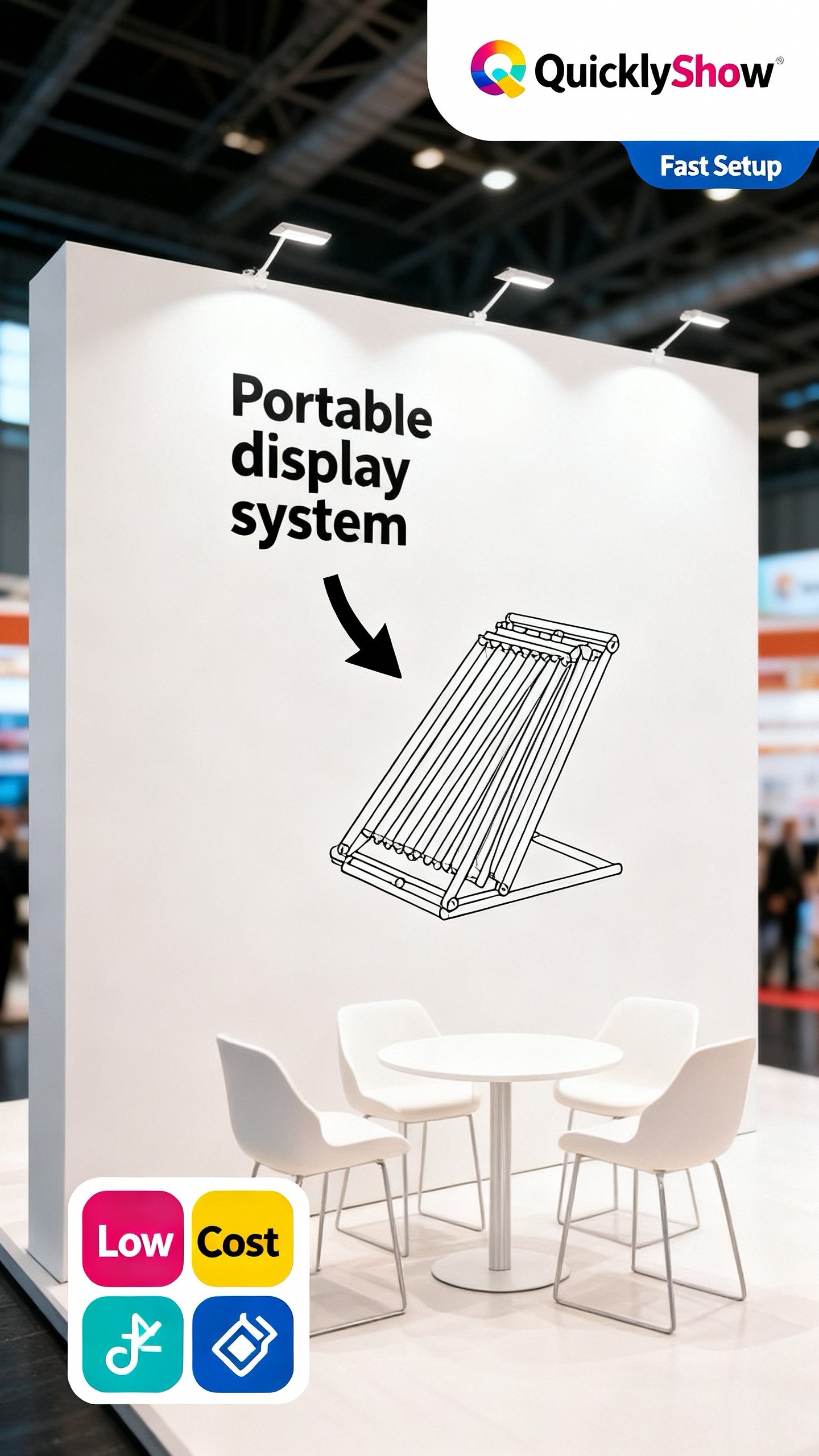
ALT: Tool-free portable trade show booth with a reusable aluminum display wall
What “tool-free” really means
Tool-free does not necessarily mean that no tool will ever be useful. It means the main structure is designed to connect without venue fabrication. A small maintenance kit may still be wise for cable management, adjustments or emergency repairs.
The supplier should identify which steps are genuinely tool-free and which accessories require separate mounting. Screens, shelves, hanging signs or venue safety hardware may follow different rules.
How it reduces labor
Traditional construction may involve carpenters, painters and electricians working in sequence. A prepared portable system changes the workflow:
- unpack and verify the inventory;
- match numbered or identified components;
- unfold or connect the frame;
- install feet and accessories;
- connect and test lighting; and
- apply the fabric graphic.
A skilled team can assemble one QuicklyShow display backwall in approximately 30 minutes. A simple booth can generally be installed in around two hours, depending on configuration. For a U.S. customer’s 3-meter pop-up lightbox, two factory team members completed the test assembly in about 30 minutes.
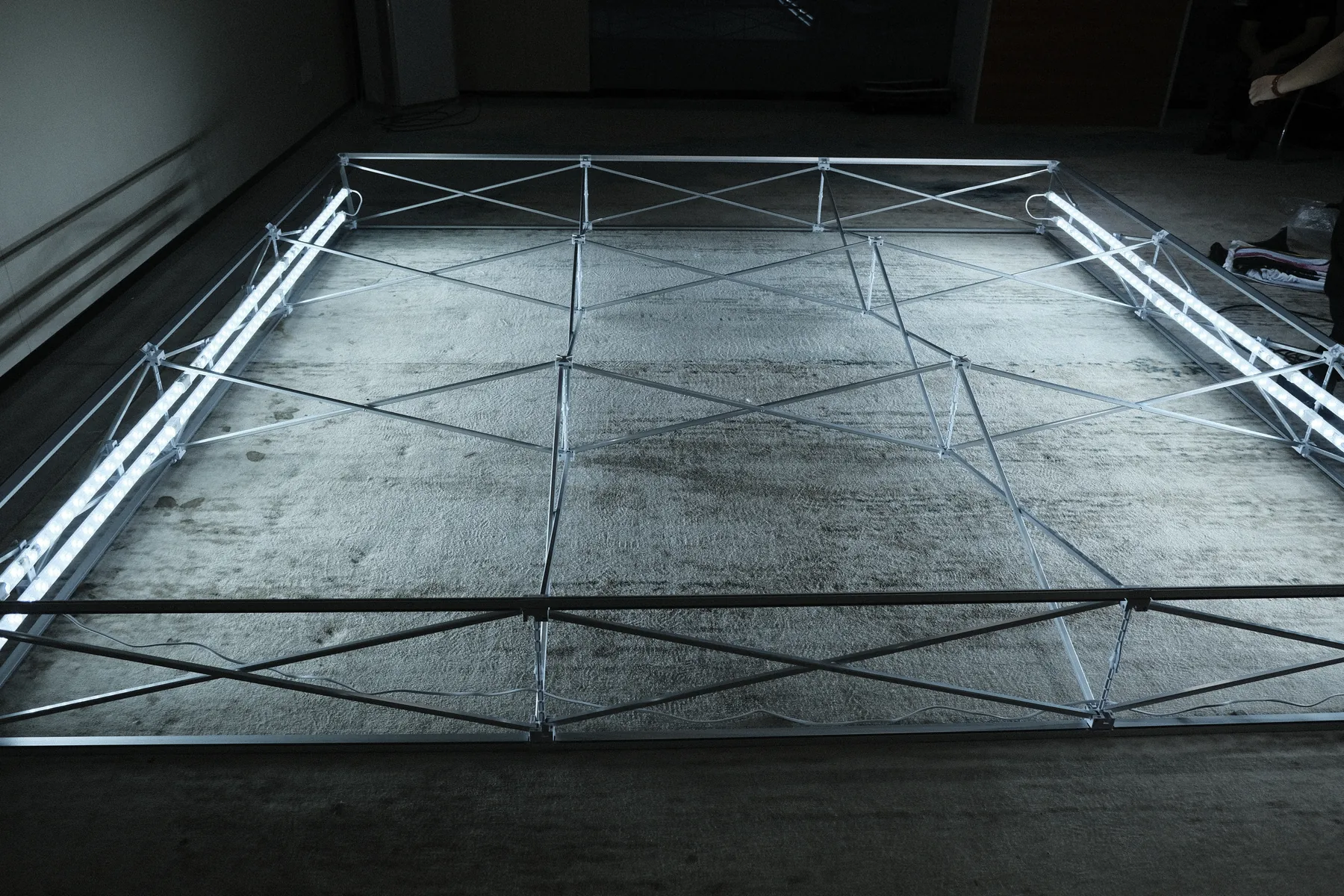
ALT: Two-person factory test of a three-meter tool-free pop-up lightbox before shipment
How it can reduce waste
When a booth arrives factory-finished, the crew does not need to cut large panels or apply paint at the venue. During dismantling, identified components return to their bags instead of becoming an unrecognized pile of construction material.
This does not make the booth “zero waste.” Changed graphics, damaged packing and consumables may still be discarded. A below-15% solid-waste statement requires actual weighing and a defined boundary.
Numbering supports the next event
Numbered profiles serve two purposes. During setup, they show the connection order. During dismantling, they become an inventory checklist. Missing parts can be identified before the shipment leaves the venue.
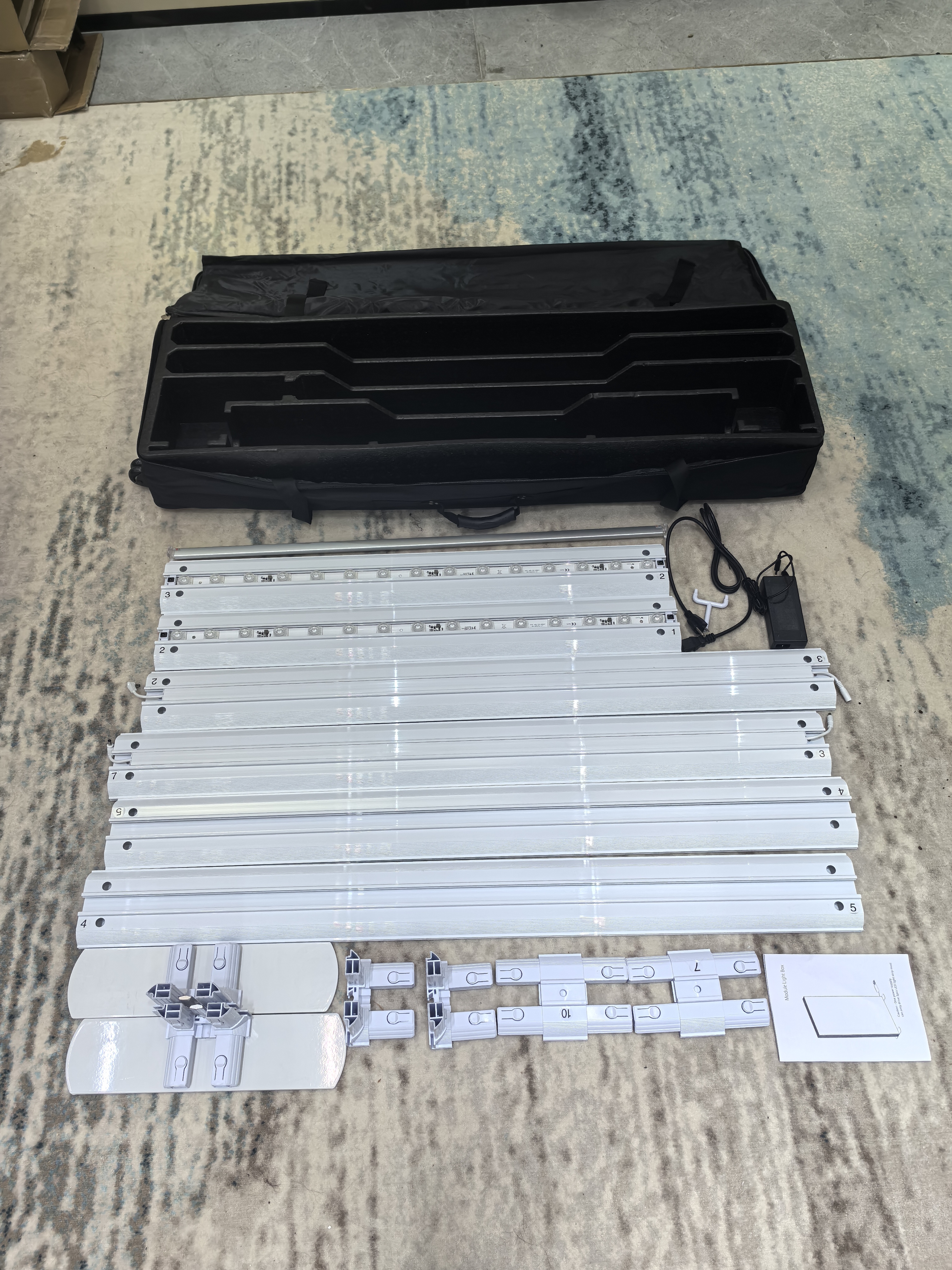
ALT: Numbered aluminum profiles, LED modules and connectors arranged before tool-free lightbox assembly
Faster installation begins at the factory
Ask the manufacturer to pre-assemble the custom configuration, illuminate the LEDs, photograph the finished booth and record a video. A drawing alone may not reveal a missing connector, cable-routing problem or graphic-fit issue.
QuicklyShow completes customized production after artwork confirmation, checks the booth and provides photographs or video for customer approval before dispatch. Buyers can also review the pop-up backdrop setup guide.
A real pre-shipment moment
For the U.S. customer’s three-meter lightbox shown above, the value of the test was not simply the 30-minute assembly time. The team could see the full frame standing, confirm that the LEDs illuminated and give the customer visual evidence before the package left the factory.
Plan labor realistically
| Configuration | Planning assumption |
|---|---|
| Small non-lit backwall | One or two people, depending on width |
| 3-meter pop-up lightbox | Two people recommended for controlled handling |
| Simple booth | Approximately two hours with a familiar crew |
| Multi-wall illuminated booth | More time for positioning, cabling and testing |
These are planning references, not universal guarantees. Venue access, flooring, electrical rules and first-time installation can change the result.
Frequently asked questions
Can one person install a tool-free booth?
Some small displays may be manageable by one person. Wider or illuminated structures are safer and easier with two people.
Does tool-free mean no professional installer is needed?
Not always. Complex layouts, suspended elements and venue-regulated electrical work may still require approved professionals.
Are replacement graphics easy to install?
They can be when produced to the correct frame dimensions and attachment specification. Confirm the artwork template and finishing method.
Reduce uncertainty before show day
Compare a 20×10 ft modular LED booth and contact QuicklyShow for an installation plan, pre-shipment test and packing list.
