
No products in the cart.
Can an Aluminum Trade Show Booth Be Reused? Lifespan, Storage and Graphic Replacement
Imagine returning from a successful show with another event already booked six months later. The brand message may change, and the floor space may be larger, but that does not mean the booth must start again from zero.
Yes, an aluminum trade show booth can be reused when its frames, connectors, lights and packing are handled correctly. With proper care and storage, QuicklyShow’s main aluminum structures can typically remain in service for approximately three to five years. The graphics may be reused while the campaign remains current or replaced independently when the message changes.
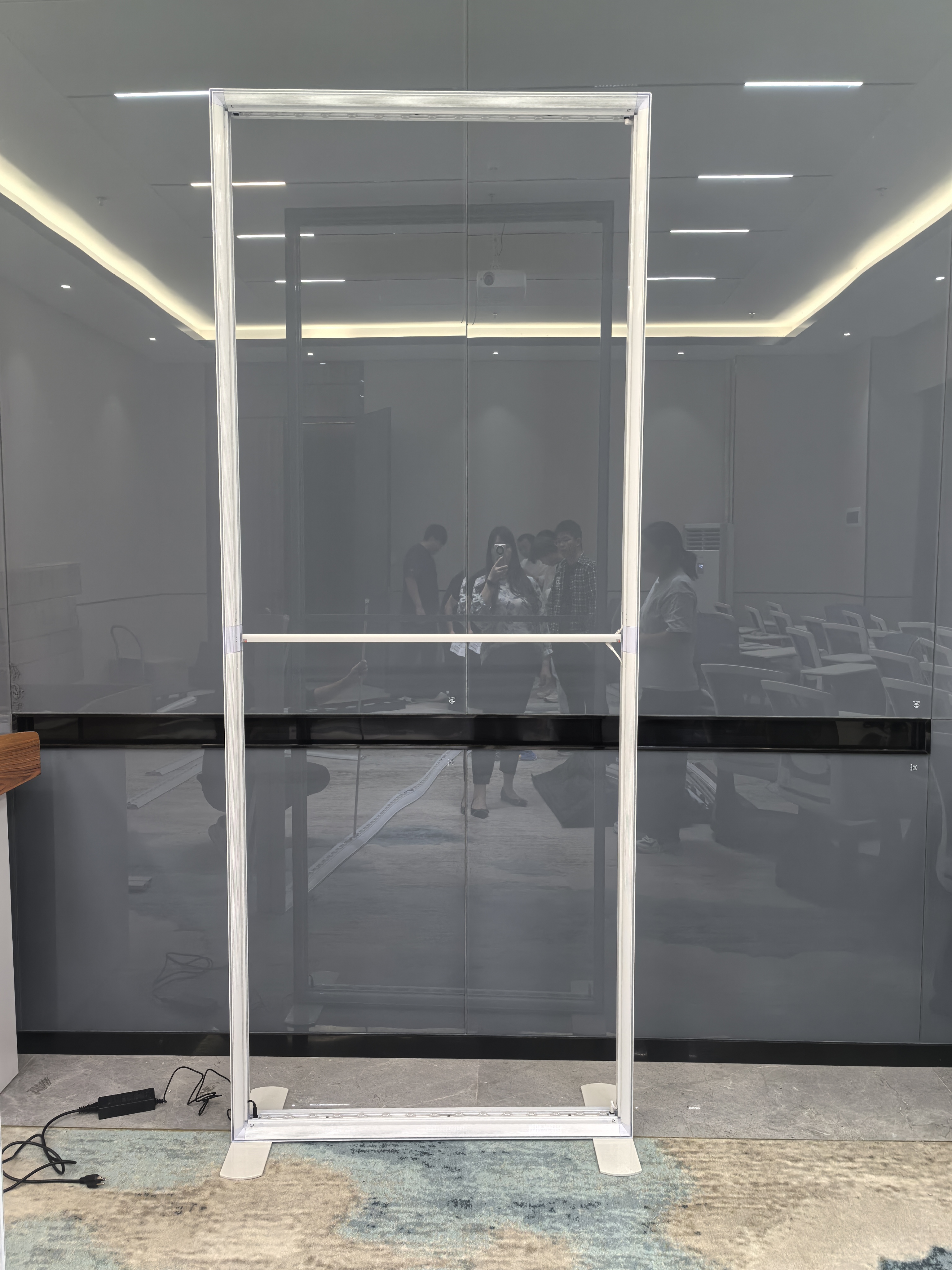
ALT: Reusable aluminum trade show booth frame before replaceable fabric graphics are installed
What determines the useful life?
The calendar alone does not determine lifespan. A booth assembled six times by a trained team may remain in better condition than one forced together once. Important factors include:
- how often the structure is assembled and dismantled;
- whether connectors are aligned rather than forced;
- protection during international transport;
- moisture, heat and pressure during storage;
- whether small damaged parts are replaced promptly; and
- whether LEDs, cables and drivers are checked before each show.
Aluminum resists many problems associated with disposable board construction, but it is not indestructible. Bent profiles, missing fittings and poor packing can shorten service life.
Reuse does not mean one fixed floor plan
Suppose a company purchases a 10×10 ft booth this year and books 10×20 ft next year. The existing 10×10 components do not become a complete 10×20 system without additions. Instead, the designer inventories the original frames, revises the layout and adds the wall, lightbox, counter or accessory modules required for the larger space.
The reverse is also possible. Selected modules from a 10×20 inventory can remain in storage when the exhibitor uses a smaller 10×10 footprint. This is a practical reason to consider a 10×10 modular portable booth as the beginning of a planned inventory rather than an isolated purchase.
A practical second-show scenario
An exhibitor that used one backwall and one counter at its first 10×10 show might keep both items for the next event, add a side wall or lightbox, and reprint only the campaign graphic. The purchasing question becomes, ‘What must we add?’ rather than, ‘What complete booth must we buy again?’
When should the fabric graphics be replaced?
Keep a graphic when it is clean, undamaged, correctly fitted and still communicates the current brand message. Replace it when:
- a campaign, logo, language or product changes;
- the fabric is permanently stained, stretched or torn;
- silicone edging or zippers no longer hold correctly;
- repeated folding creates visible damage; or
- color no longer matches the rest of the booth.
Replacing graphics does not make the booth non-reusable. It extends the value of the long-life frame by separating permanent hardware from campaign-specific communication.
A storage routine after every event
- Photograph the booth before dismantling.
- Follow the reverse installation sequence.
- Count numbered profiles, connectors, feet, LEDs and cables.
- Clean and fully dry fabric before folding.
- Place profiles into their assigned foam or bag positions.
- Label every case with the booth layout and inventory date.
- Store packages in a dry area away from heavy stacking and sharp objects.
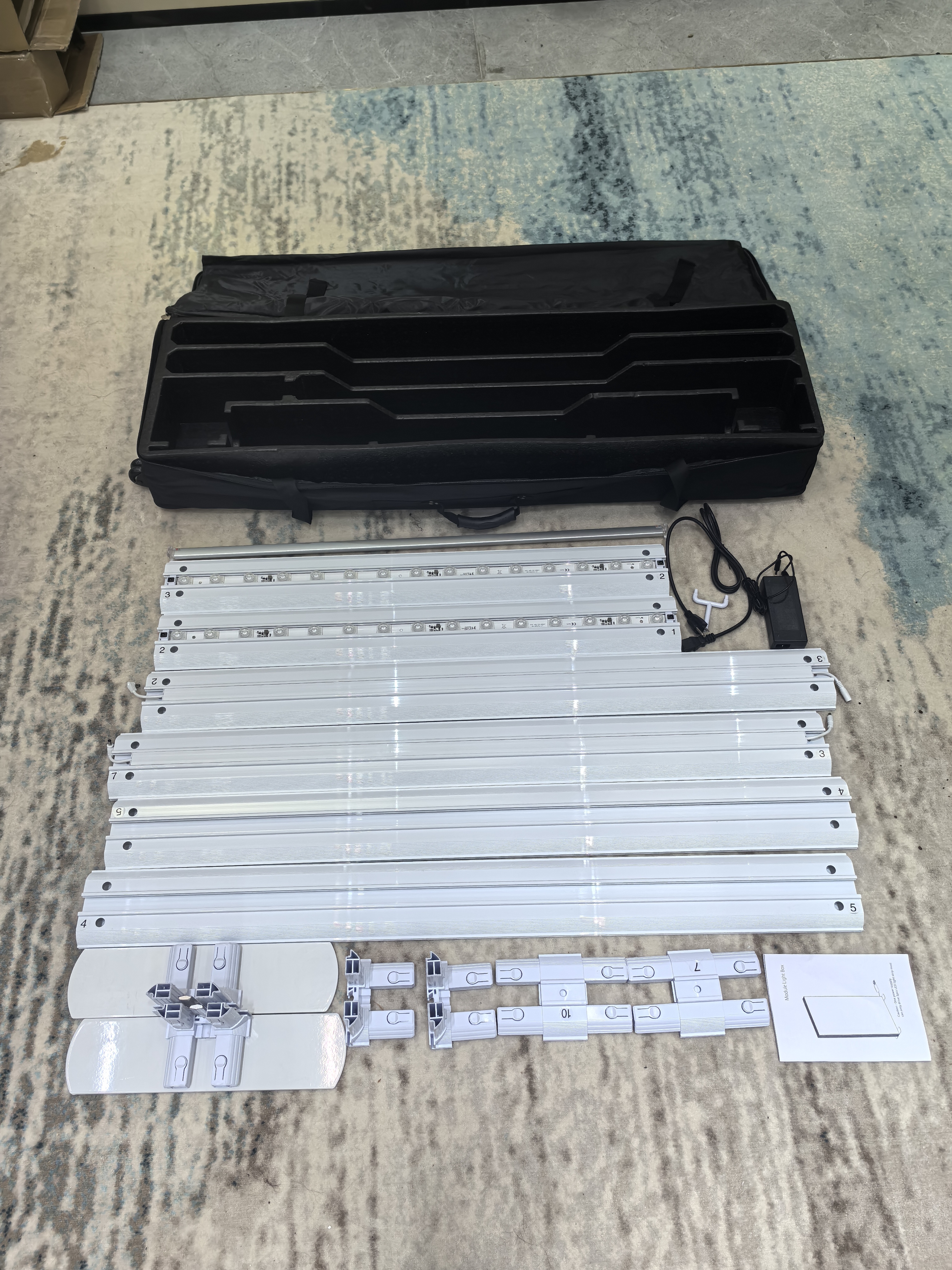
ALT: Numbered aluminum booth profiles, LED modules, connectors, feet, power supply and reusable carry bag arranged for inventory
Repair or replace?
A missing connector, damaged foot or failed power supply should not require discarding the complete booth. Send the supplier photographs, the part number and product dimensions. QuicklyShow lightbox products carry a one-year warranty; when covered damage or deformation occurs within that period, the corresponding replacement part can be supplied without a part charge, with the buyer responsible for freight.
For later wear, replacement-part availability should be considered during purchasing. Keeping a small event kit with common connectors, cables and tools can prevent an inexpensive missing part from delaying setup.
Frequently asked questions
Can the aluminum frame be recycled at end of life?
Aluminum is commonly recoverable, but the exact route depends on local facilities and whether mixed materials, electronics and graphics are separated. Do not describe the whole booth as 100% recyclable without component-level evidence.
Can old graphics be used on a new frame?
Only when the dimensions, attachment method and tension are compatible. Confirm the graphic specification before ordering a replacement frame.
How should LEDs be stored?
Disconnect power, protect cables from tight bends and keep LED modules dry and cushioned. Test them before shipment to the next event.
Plan for the second and third show
The best time to plan reuse is before the first shipment. Keep the original drawing, packing list and part numbers with the booth. Those three records make the next redesign, replacement graphic or spare-parts request much faster.
Read Reusable Trade Show Booths: How They Reduce Waste and Cost and review QuicklyShow’s portable display manufacturing services. For an expansion or replacement-parts plan, send the existing inventory and new floor plan.
