
No products in the cart.
Collapsible vs. Folding Trade Show Displays: What Is the Difference?
A collapsible display usually expands or contracts through an interconnected frame, while a folding display uses hinged panels or sections that fold against one another. Both are portable, but they differ in graphic attachment, packed shape, flexibility and the way wear develops over repeated use.
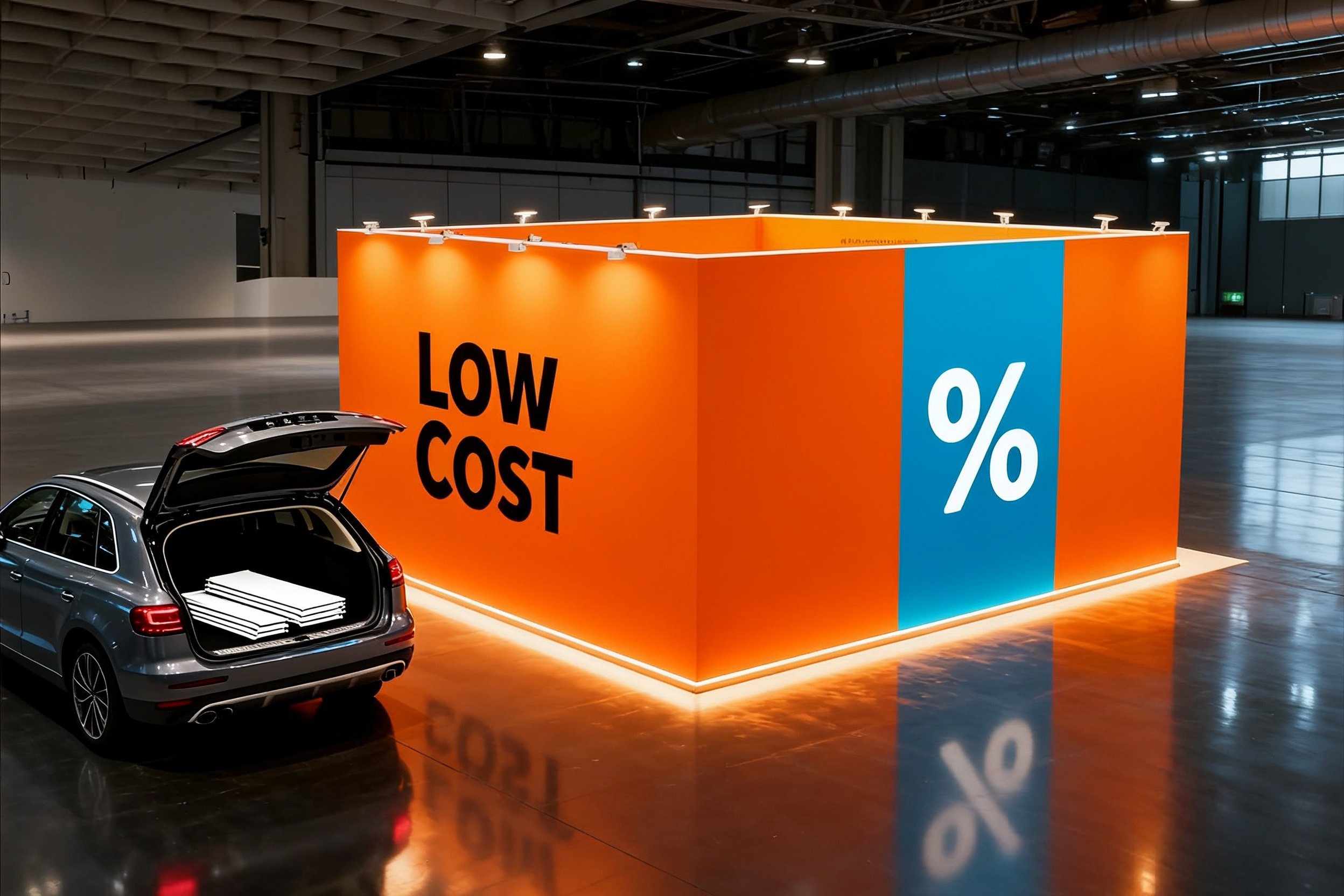
How collapsible displays work
Pop-up frames are the most common example. An accordion-style structure expands into a backwall and locks into position. Graphics may attach with hook-and-loop, magnetic bars or fitted fabric, depending on the model.
Collapsible systems are valued for fast deployment and compact storage. Buyers should inspect locking hubs, frame joints and graphic attachment because these parts receive repeated movement.
How folding displays work
Folding systems use rigid or semi-rigid panels, hinged frames, folding counters or connected wall sections. They can provide stable surfaces and a defined packed form. Their hinges, latches and panel edges need protection during transport.
The term “folding booth” is sometimes used broadly, so request an assembly video rather than relying on the product name.
Comparison
| Factor | Collapsible display | Folding display |
|---|---|---|
| Main movement | Frame expands and contracts | Panels or sections fold |
| Packed form | Often compact but thicker | Often flatter and wider |
| Graphic style | Fabric, magnetic or attached panels | Printed panels or fitted fabric |
| Wear points | Hubs, locks and frame joints | Hinges, latches and edges |
| Typical use | Backwalls and pop-up structures | Counters, panel walls and accessories |
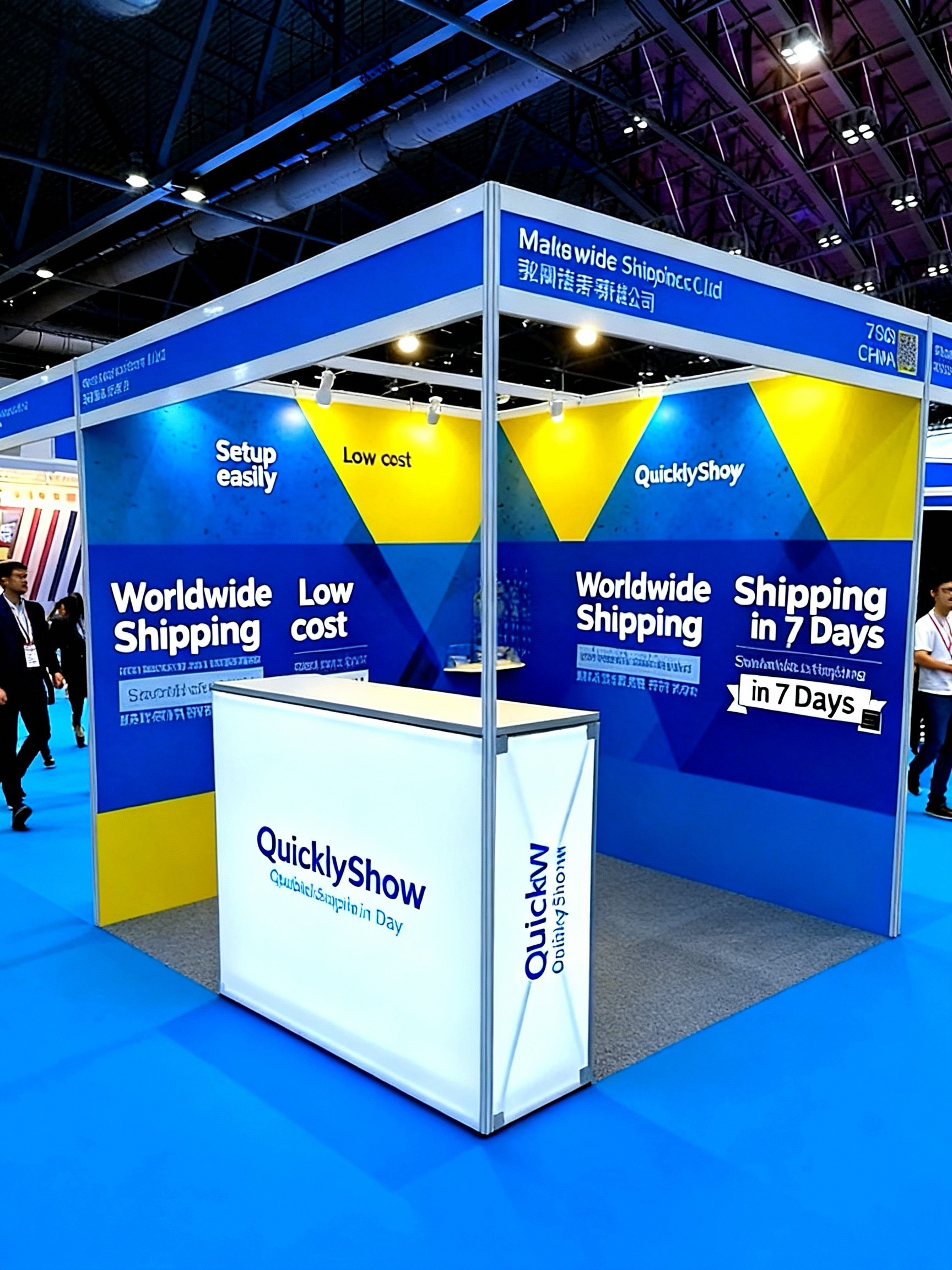
What to inspect before buying
Operate the sample or watch a complete setup video. Check whether the frame locks positively, whether graphics can remain attached, and how the system fits into its case. Confirm assembled dimensions, packed dimensions and weight.
Ask how individual hubs, hinges or panels are replaced. A portable product becomes a poor long-term investment when one worn part makes the entire display unusable.
Which option is better?
Choose based on the display function. A collapsible pop-up can be ideal for a fast fabric backwall. A folding counter can provide storage and a work surface. Many booth kits use both principles rather than treating them as competing systems.
Explore QuicklyShow’s trade show display range for portable backwalls, counters and modular elements.
Reference weight and lightbox depth
QuicklyShow’s smallest pop-up display frame starts at approximately 3 kg. Its pop-up lightbox format has a 31 cm profile, providing illuminated impact for more developed booth designs. Weight changes with size and configuration, so buyers should confirm the packed specification for the exact model rather than relying on the minimum-frame figure.
For QuicklyShow lightbox products, the warranty period is one year. If the product is damaged or deformed during that period, QuicklyShow provides the applicable replacement parts free of charge; the buyer pays the shipping cost for those parts.
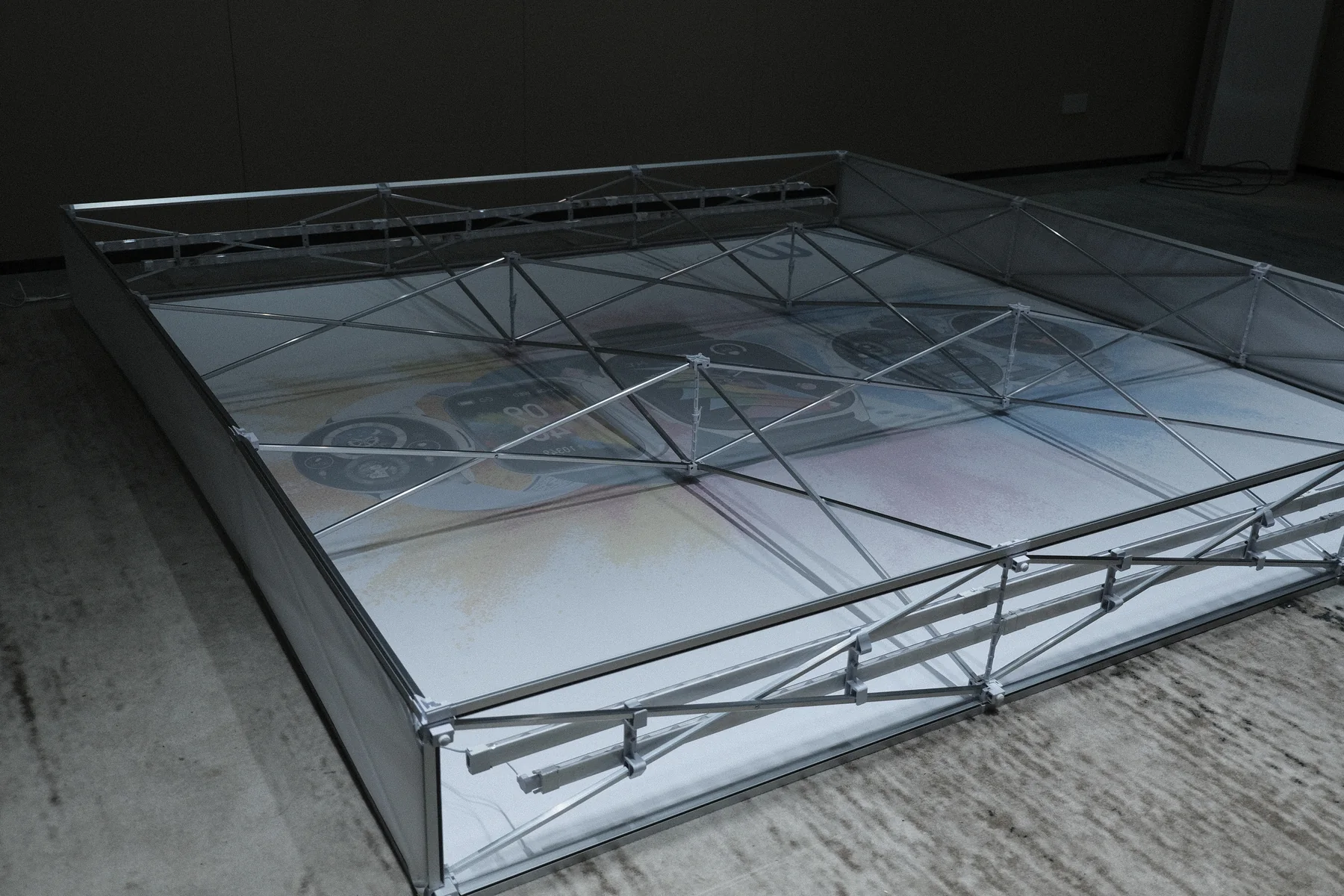
Customer-project evidence: 3 m pop-up lightbox
The following image documents a real 3 m pop-up lightbox ordered by a customer in the United States. Before shipment, two QuicklyShow team members assembled the system in approximately 30 minutes, checked the expanded frame and graphic fit, tested the lighting, and prepared photos and video for customer confirmation.
Frequently asked questions
Is a pop-up display the same as a collapsible display?
Pop-up displays are a common collapsible type, but not every collapsible structure uses the same accordion mechanism.
Which is easier to ship?
Compare the actual case dimensions and weight. Folding does not automatically mean smaller, and collapsible frames may still require long cases.
Can graphics be replaced?
Often, yes. Replacement depends on the specific attachment system and stored dimensions.
Match the mechanism to the job
Tell QuicklyShow whether you need a backwall, counter or complete portable booth through the quote form.
