
No products in the cart.
Slim-Frame LED Lightboxes for Exhibitions: Benefits and Buying Checklist
A slim-frame LED lightbox combines a narrow aluminum profile, internal LEDs and a tensioned fabric graphic. It is a strong choice for exhibitors who want illuminated branding without the visual bulk of a deep cabinet.
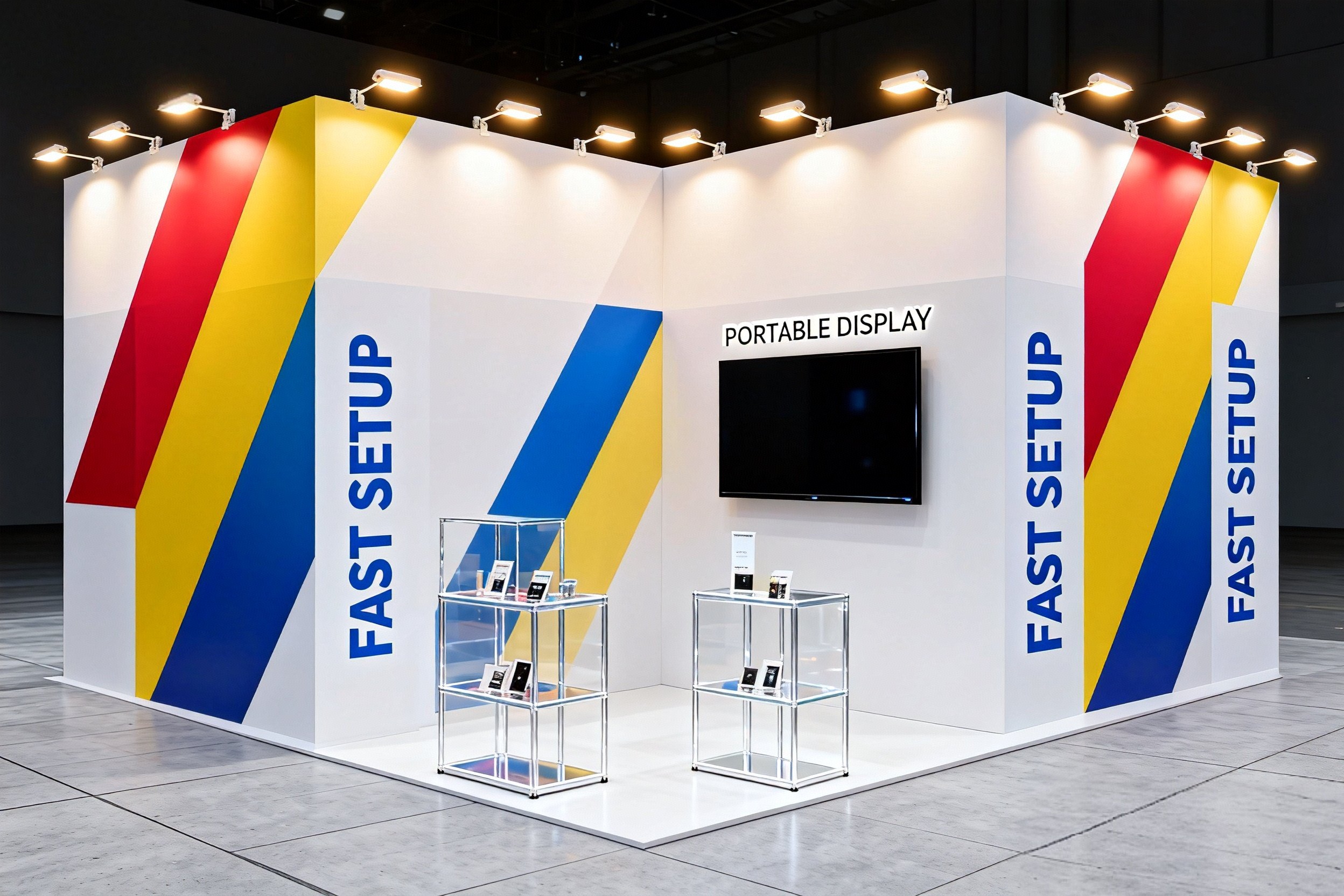
ALT: Slim-frame SEG LED lightbox used as an exhibition backwall
Why frame depth matters
A narrow profile preserves usable floor area and creates a clean architectural line. QuicklyShow’s slim SEG lightbox is about 12 cm thick, while its collapsible pop-up lightbox is about 31 cm. The deeper product may offer different portability benefits, so depth should be evaluated together with packed size and setup method.
Four useful applications
- A backlit 10×10 booth backwall.
- An illuminated feature inside a 10×20 modular booth.
- A double-sided aisle display.
- A branded lightbox counter or reception point.
Do not assume one frame fits every application. Double-sided units, connected walls and counters need suitable feet, connectors and electrical planning.
What creates an even illuminated image?
Even results depend on LED placement, diffusion distance, fabric density, print preparation and correct tension. Ask the supplier to illuminate the completed unit during inspection. Photographs help, but video can reveal flicker, loose edges or inconsistent connection points more clearly.
Portability and installation
Sectional aluminum frames pack smaller than their assembled footprint. QuicklyShow generally keeps booth material packages within 1.3 meters in length. Components carry connection labels and assemble without additional tools. An experienced team can install one display wall in about 30 minutes, while a simple complete booth can take about two hours.
Actual time varies with size, accessories and crew familiarity. A rehearsal before the event remains good practice.
Voltage and plug options for international exhibitions
QuicklyShow can configure European-standard 220V or U.S.-standard 110V electrical systems according to the destination exhibition market. The appropriate plug or conversion plug can also be supplied to match the voltage and socket standard at the venue. Buyers should provide the destination country and confirm the event's electrical requirements before production; never assume that the socket used at one venue will apply to another.
Buying checklist
Ask for:
- finished and packed dimensions;
- gross weight and carton quantity;
- voltage, plug and power consumption;
- single- or double-sided specification;
- feet and connector details;
- artwork template and safe area;
- test-assembly evidence;
- replacement-part and graphic availability;
- warranty terms.
Cost and lifecycle
For a simple 10×10 booth, QuicklyShow’s indicative starting price for a slim SEG lightbox backwall and SEG lightbox counter is about $2,200. Design, size, lighting, accessories, freight and destination charges affect the final figure.
Aluminum hardware can typically serve for three to five years when stored correctly. Replacing only the fabric image can lower the cost per event and reduce material consumption.
Frequently asked questions
Is a slim lightbox bright enough for a trade show?
It can be, but ambient hall lighting and artwork density affect perceived brightness. Review a fully illuminated pre-shipment test.
Can slim frames form a larger wall?
Compatible modules can be connected, subject to engineered connectors, feet and the approved drawing.
Is professional installation required?
Many portable systems are tool-free. Large or complex configurations may still benefit from an experienced crew and venue-approved electrical work.
Plan your lightbox wall
Send QuicklyShow your booth dimensions and desired illuminated area to receive a proposed frame configuration, artwork template and quotation.
