No products in the cart.
Trade Show Lighting Ideas: How to Light Graphics, Products and Conversations
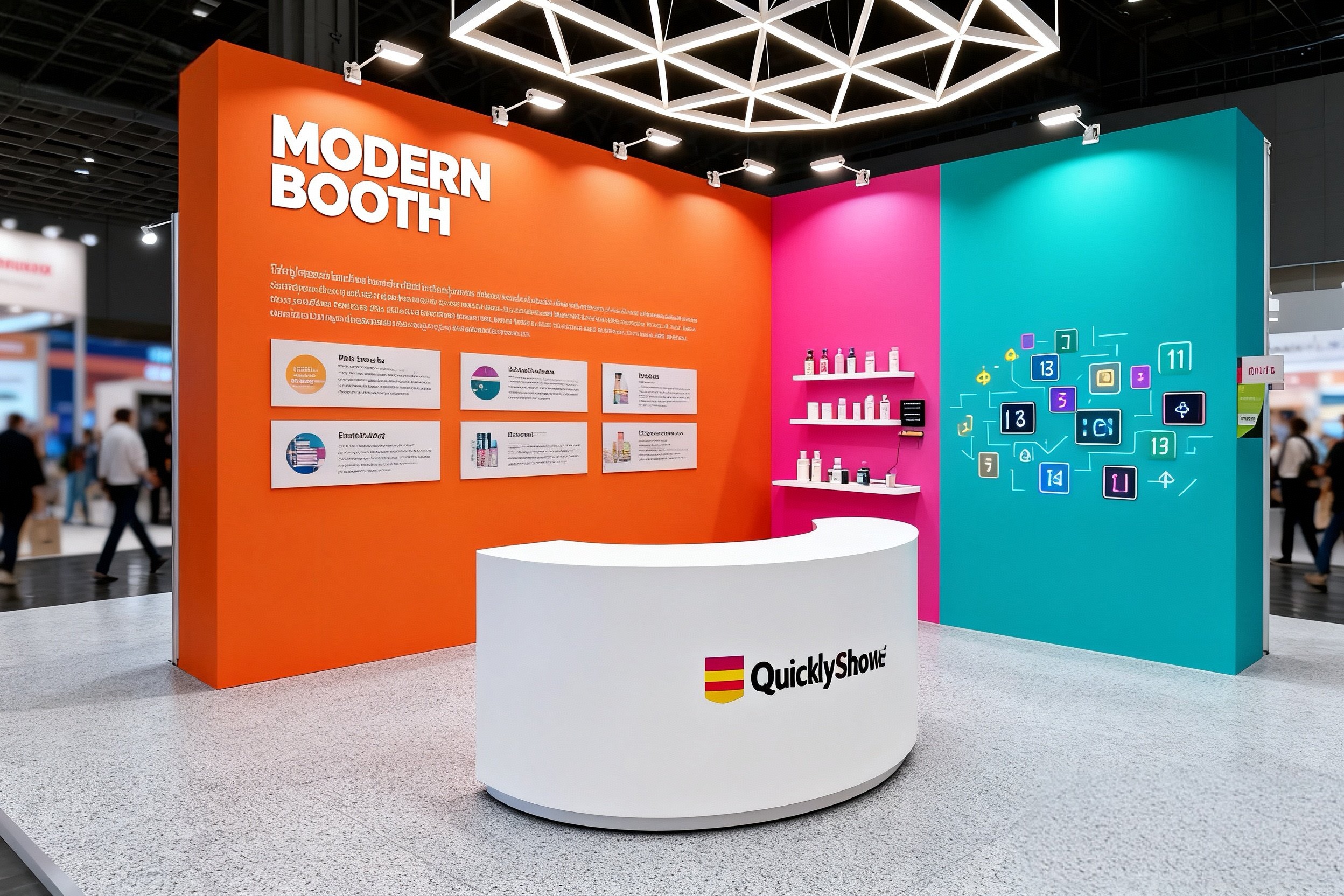
Useful trade show lighting helps visitors see the message, examine the product and interact comfortably. Begin by naming what each light needs to illuminate. A bright booth can still have a dark demonstration surface or a screen obscured by reflections.
Build the lighting plan around tasks and viewing positions, then select the compatible fixtures and services. This makes booth lighting ideas easier to evaluate than choosing lights solely for their appearance in a rendering.
Light the primary activity first
Identify where the visitor needs to look during the main interaction. For a product demonstration, include the operating surface and the product detail being discussed. For a consultation, consider both the writing surface and the people using it.
Place the actual product in the rehearsal. Packaging, reflective finishes and transparent parts can behave differently under the same light. A photograph of an empty counter does not establish whether visitors can inspect the sample.
Review the graphic as a separate surface
For front-lit graphics, test fixture position, beam coverage and shadows from nearby equipment. Check the upper and lower parts of the printed area rather than judging only the brightest section.
For a SEG lightbox display stand, request a demonstration of the specified illuminated graphic. Confirm the graphic and frame combination and examine the complete display, including edges and joined sections. Do not assume that lighting a wall also provides sufficient light for products in front of it.
Check glare from the visitor's position
Walk the booth from each approach direction and stand where a visitor will stop. Look for exposed bright sources, reflections on screens and glare on product packaging. Repeat the check at seated positions if the exhibit includes meetings.
If a screen is difficult to read, change the relationship between the screen and the light before increasing brightness everywhere. An adjustment in fixture angle, screen position or surrounding surface may address the actual problem.
Use lighting differences with a purpose
Consider an exhibit with three tasks: identify the offer, inspect a sample and complete a request form. Give each task adequate light and a clear place in the layout. Decorative lighting should support those tasks rather than compete with them.
Use colored accent lighting selectively when evaluating it. Check whether it changes the appearance of a product or interferes with the brand's printed colors. Neutral product inspection and a colored decorative feature may need separate treatment.
Build a fixture and power schedule
| Item | Information to record |
|---|---|
| Fixture | Model, quantity and mounting method |
| Intended task | Graphic, product, work surface or accent |
| Power | Rated requirement and compatible supply |
| Position | Drawing reference and aiming direction |
| Connection | Cable route and assigned installer |
| Backup | Approved replacement or operating alternative |
Give the schedule to the relevant service provider and confirm the event arrangements. Ask who is responsible for each connection and mounting task. An LED booth display's product specification does not establish what electricity or installation is included in your space booking.
Test before packing
Assemble the proposed trade show display with LED lighting and run the actual content. Check shadows with staff standing in their working positions. Confirm that cables and power supplies have an assigned location and that storage can still be accessed.
Photograph the accepted arrangement and label the fixture positions. Those references help another team reproduce the setup. Keep the manufacturer instructions with the kit so a photograph does not become a substitute for the installation requirements.
Measure the result against the original problem
After the event, record whether products were easy to inspect, whether screen glare interrupted demonstrations and which adjustments staff made. These observations are more actionable than a general claim that the booth looked brighter.
If you also measure qualified inquiries, record the event and staffing conditions. Lighting is one part of the visitor experience, not an independent guarantee of conversion.
Frequently asked questions
Should the whole booth have equal brightness? Match illumination to the tasks and keep important information comfortable to view.
Is one color temperature always best? Test the selected fixtures with the actual products, graphics and surrounding light.
Can I add lights after ordering the booth? Check compatible mounts, power and event arrangements before purchasing additional fixtures.
Ask QuicklyShow to review the lighting and graphic requirements of the selected display configuration.
