
No products in the cart.
How to Source Trade Show Booths from China: A Buyer’s Guide
To source a trade show booth from China successfully, convert your event needs into a written specification, compare suppliers on identical scope, approve drawings and artwork, require a full test build, and plan production plus shipping backward from the show date. The greatest risks are usually unclear scope, untested customization and insufficient schedule buffer—not the physical distance alone.
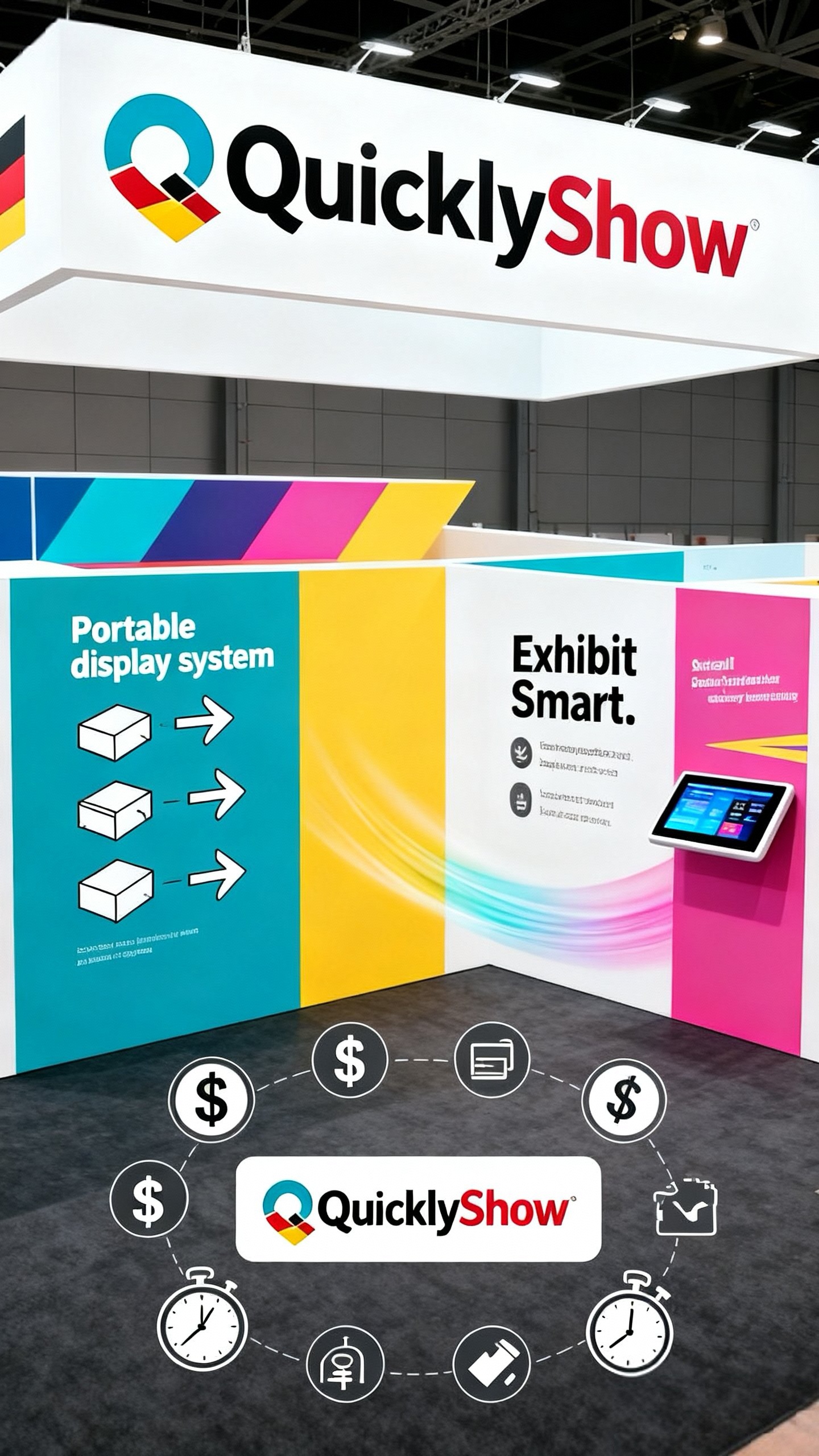
ALT: Portable trade show booth kit sourced from a China exhibition display supplier
Step 1: Define the project before requesting prices
Provide more than a reference photo. A useful sourcing brief includes:
- Booth footprint and number of open sides
- Event city, venue and show dates
- Organizer rules and maximum height
- Required walls, counters, storage, screens, shelves and lighting
- Preferred portable, modular, fabric or lightbox system
- Brand assets and visual references
- Delivery address and required arrival date
- Reuse plans and future booth sizes
- Target budget or acceptable range
If you do not yet know the system, describe the outcome and constraints. A qualified supplier should recommend options and explain tradeoffs.
Step 2: Build a shortlist
Review relevant project examples, product construction, communication quality and export experience. Ask whether the supplier can coordinate frame production, fabric printing, lighting, packaging and quality control.
Verify business details through appropriate commercial checks and request references when justified by order value. A video call showing products or facilities can add context, but it should not replace documented inspection of your order.
Step 3: Standardize quotation scope
Send the same brief to each shortlisted supplier. Require an itemized quotation that identifies hardware, graphics, lighting, accessories, cases, spares, design services, packaging and testing.
Clarify currency, payment schedule, quotation validity and Incoterm. State the named port or place. Confirm whether duties, taxes, customs clearance, final-mile delivery, venue handling, installation and furniture are included or excluded.
Step 4: Approve engineering and artwork
For custom displays, approve dimensioned drawings or a 3D design before production. Confirm stability, screen mounts, shelves, cable paths and assembly access. Venue approval remains important even when the booth is portable.
Use the manufacturer’s artwork template. Check panel order, seams, visible area, safe area and color expectations. A small design approval mistake becomes a very large printed mistake.
Step 5: Use samples strategically
A complete booth sample may not be practical, but material samples, printed color proofs, profile sections or a first production unit can reduce uncertainty. Choose sampling based on risk: custom profiles, critical colors, large quantities and repeat programs justify more validation.
Step 6: Require a full test build
The supplier should assemble the actual booth configuration before packing. Review dated photos or video and an inspection checklist. Verify dimensions, graphics, lighting, stability, accessories, component count and labeling.
For high-value or repeat orders, consider an independent inspection using an agreed checklist. Define acceptance criteria before production, not after a disagreement.
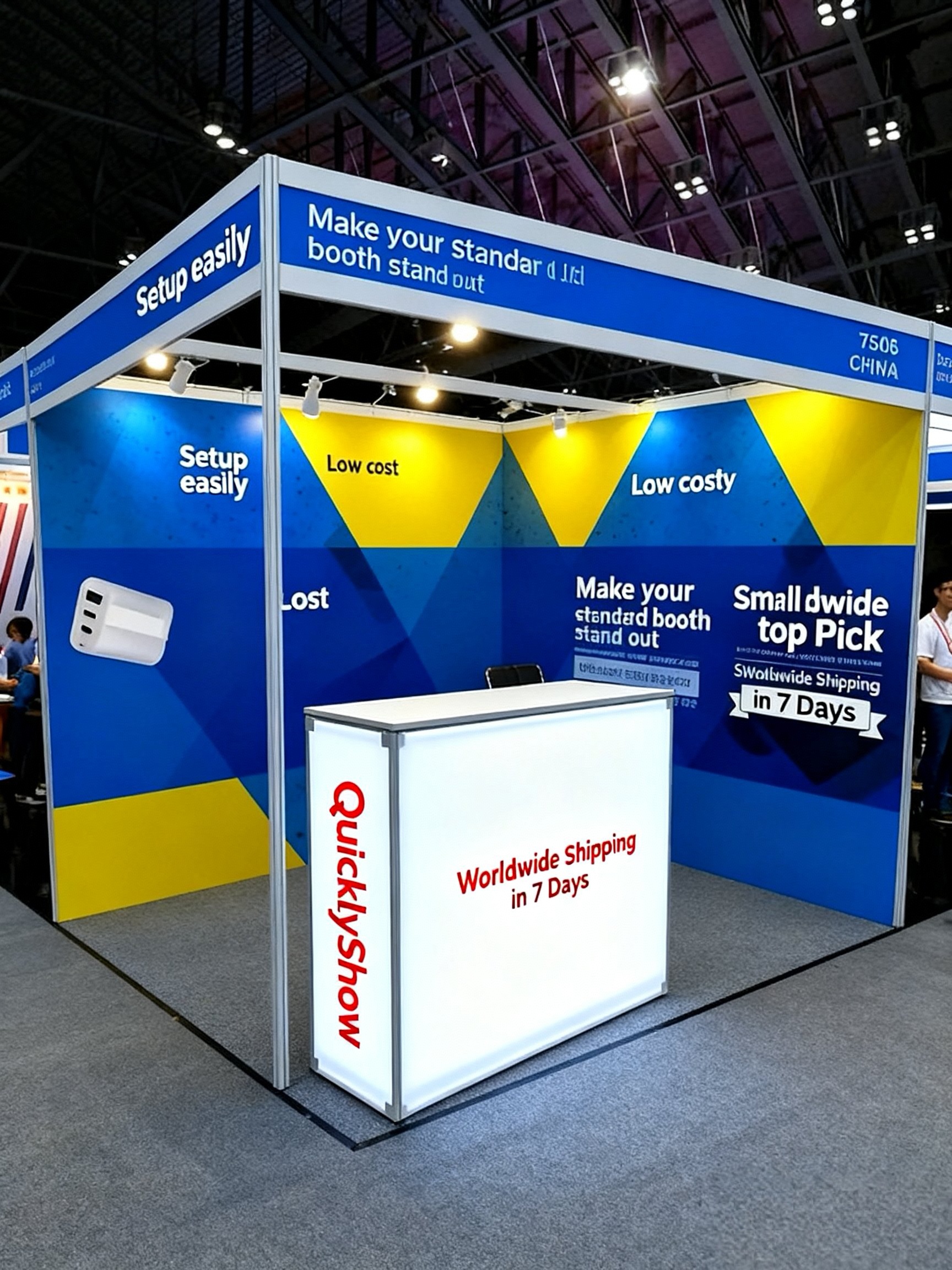
ALT: Compact easy-carry trade show display designed for international exhibition logistics
Step 7: Plan shipping backward from the event
Create milestones for final brief, design approval, artwork approval, material preparation, production, test build, correction, packing, dispatch, customs clearance and delivery. Add buffer for revisions and transport variability.
Air freight may be faster but more expensive; ocean freight usually requires a much longer schedule. Courier services may suit smaller cases but have size and weight limitations. Ask a freight professional to confirm the route for the actual packed dimensions.
Do not ship directly to a venue without confirming receiving dates, labels and material-handling procedures. Many venues use appointed contractors and strict delivery windows.
Step 8: Protect the booth after arrival
Inspect cases immediately and document damage before discarding packaging. Test-build the booth well before the event. Count all components against the packing list and test electrical items using appropriate local power.
Store drawings, artwork, component lists and supplier contacts in a shared project folder. These records make replacement orders and future reuse much easier.
Common sourcing mistakes
- Comparing prices for different component lists
- Approving only a rendering without technical details
- Leaving electrical requirements until the end
- Assuming “door delivery” includes venue delivery
- Skipping the pre-shipment test build
- Planning to arrive just before setup
- Failing to order small spare connectors or lighting parts
- Ignoring packed size when estimating freight
Working with QuicklyShow
QuicklyShow provides portable, modular, fabric and lightbox-based exhibition solutions for global exhibitors. The company’s public offering includes design and production support as well as assistance coordinating broader exhibition requirements. Confirm the exact scope, delivery terms and schedule for each project in the formal quotation.
Frequently asked questions
Is sourcing a booth from China suitable for one urgent event?
It depends on design complexity, production readiness, shipping time and schedule buffer. Never base the decision on an unqualified headline lead time.
Which Incoterm should I use?
The best term depends on your importing capability and logistics arrangement. Ask a freight or customs professional to explain responsibilities, costs and risk for the named route.
Should I use third-party inspection?
It can be valuable for large, customized or repeat orders. The inspection must use clear specifications and acceptance criteria.
What documents should I retain?
Keep the quotation, purchase order, approved drawings, artwork proofs, inspection records, packing list, shipping documents and part identifiers.
Related resources
- Review QuicklyShow one-stop exhibition solutions.
- See a custom portable trade show booth example.
- Learn how to choose a portable booth manufacturer.
- Understand custom trade show booth cost factors.
- Check the ICC Incoterms rules overview with a qualified logistics adviser.
- Submit a sourcing brief.
Start with a sourcing-ready brief
Send QuicklyShow your floor plan, show date, delivery destination, desired functions and brand files. Ask for an itemized proposal with design milestones, production checks and shipping assumptions.
