
No products in the cart.
10×10 Trade Show Booth Ideas: Portable Designs for Small Spaces
A successful 10×10 trade show booth uses one strong visual anchor, an open entrance and only the furniture needed for the exhibit goal. Portable backwalls, tension-fabric displays, SEG lightboxes and compact counters can create a professional small booth while keeping setup and transport manageable.
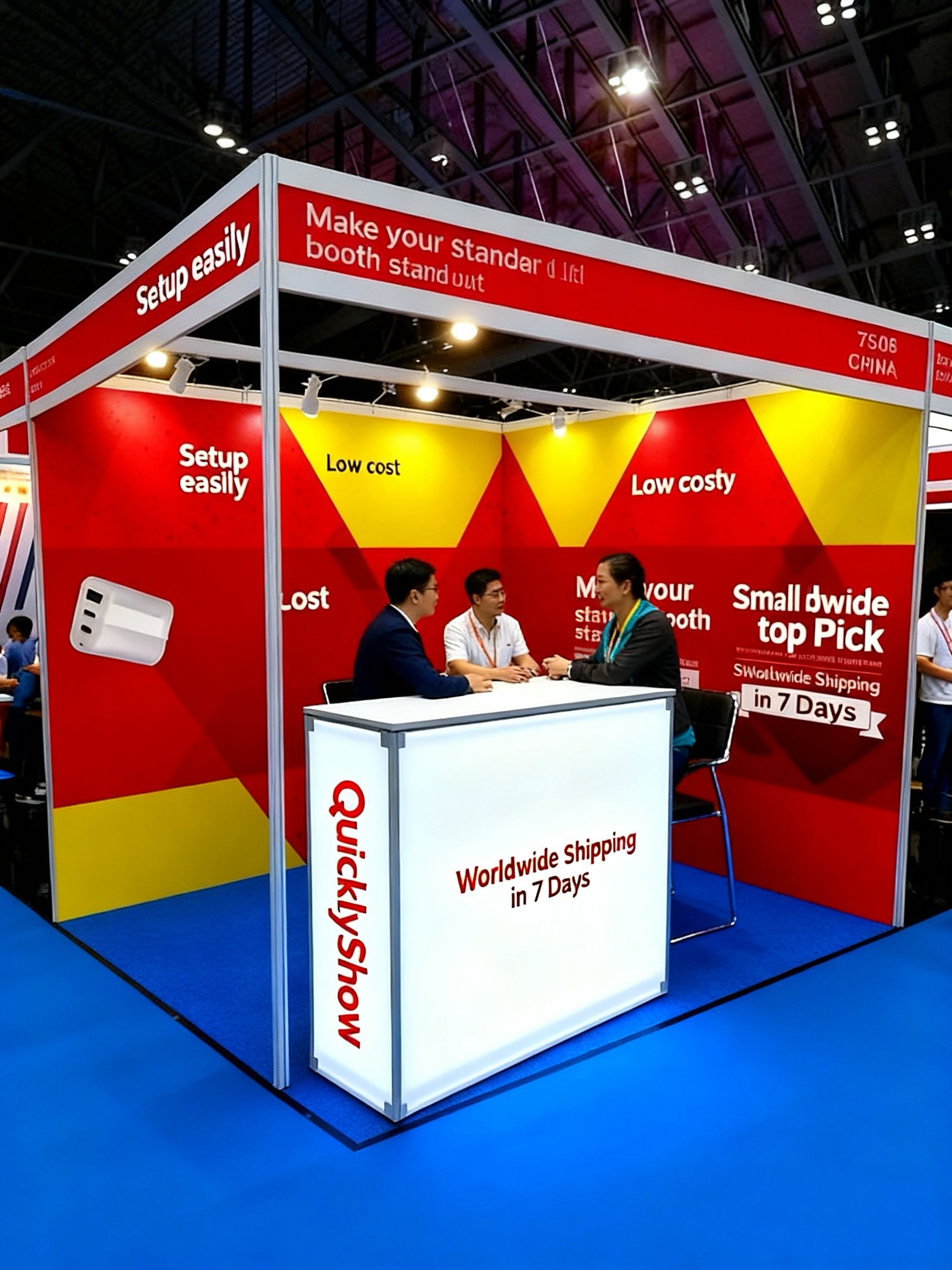
ALT: 10×10 portable trade show booth with printed walls, lighting and a reception counter
Why 10×10 booth design requires discipline
A 10×10-foot space offers about 100 square feet before displays and furniture are added. Every object affects visitor movement. Oversized counters, multiple banner stands and unnecessary seating can make the booth feel closed.
Begin with one objective. Do you need to demonstrate a product, collect qualified leads, hold short conversations or build brand awareness? The answer determines whether the floor should hold a demo station, counter, screen or small meeting area.
Idea 1: Seamless fabric backwall and counter
Use a full-width tension-fabric backwall as the main visual surface and place a compact counter to one side. This provides branding, a greeting point and hidden storage without dividing the booth.
Keep the headline short enough to read from the aisle. Position the logo high, where visitors and furniture will not block it. Use the counter for lead capture rather than as a barrier across the entrance.
Idea 2: Backlit SEG feature wall
A single illuminated wall can create contrast in a crowded hall. Use one clear message and a focused product image. Plan electrical service and cable routing in advance, and confirm that the frame can be packed and assembled according to your travel needs.
If the budget does not support a full illuminated backwall, a narrower lightbox can act as a visual beacon beside a front-lit fabric wall.
Idea 3: Modular corner configuration
For a corner booth with two open sides, use an L-shaped modular arrangement that defines the brand area without closing the entrances. Put the primary message on the surface facing the strongest traffic direction and use the second wall for supporting information.
Choose modules that can return to a straight layout for a future inline booth.
Idea 4: Product demonstration booth
Allocate one side to a demo counter or product pedestal and leave space for two or three viewers. Mount a screen only when motion or explanation adds real value. Keep accessories and spare materials hidden in the counter or a compact storage unit.
Idea 5: Startup-friendly portable kit
For a first exhibition, combine a reusable fabric backwall, portable counter and focused lighting. This is easier to coordinate than many unrelated signs. Invest in good artwork and a system that accepts replacement graphics as the company grows.
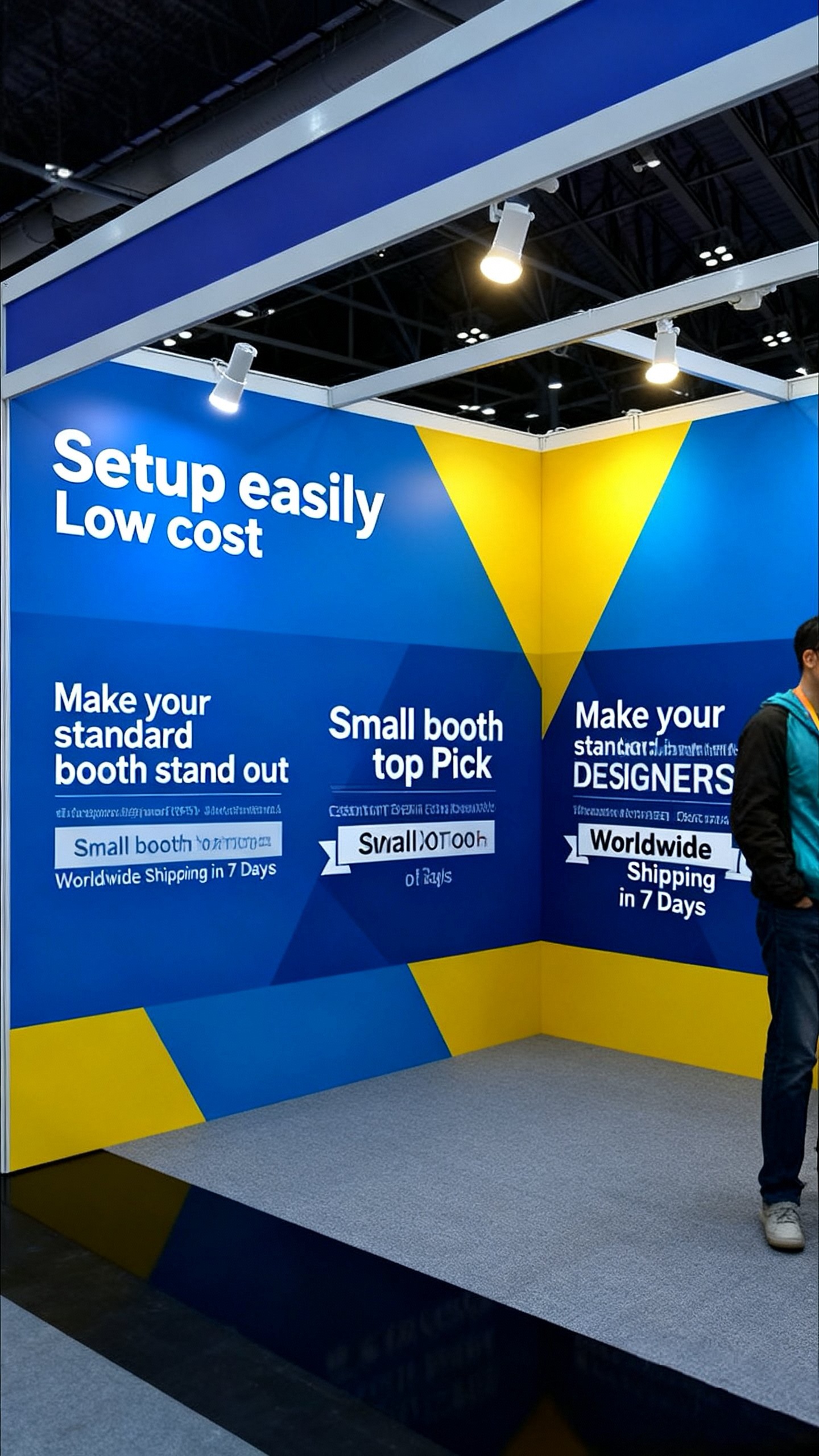
ALT: Portable trade show booth for a startup exhibiting in a compact 10×10 space
Idea 6: Conversation-focused layout
Use a backwall and one small standing-height table for short discussions. Standing conversations usually consume less floor space than a full seated meeting set. For confidential or lengthy meetings, book a nearby room instead of forcing privacy into a 10×10 booth.
Small-booth design rules
Keep the entrance open
Avoid placing a large counter across the aisle edge. Visitors are more likely to enter when the path is visually clear.
Design for three-second comprehension
People walking the aisle should quickly understand who you are, what you offer and why they should stop. Use a short headline, one visual and a clear proof point.
Use vertical space carefully
Place the logo and main message high, but check venue height rules. Do not overload the wall with paragraphs that cannot be read at a distance.
Control storage
Personal bags, cartons and coats quickly consume a small booth. Use a counter with internal storage or plan secure off-booth storage.
Light the message, not the entire hall
Aim lighting at the key graphic or product. Confirm power and fixture placement before arrival.
Portable 10×10 booth checklist
- Confirm whether the space is inline or corner.
- Review height, setback and neighboring-booth rules.
- Limit the layout to one main display and essential furniture.
- Check packed dimensions and transport method.
- Plan electricity, screen mount and cables.
- Test-build the complete kit.
- Prepare a lead-capture method and staff positions.
- Keep spare connectors and cleaning materials accessible.
QuicklyShow 10×10 booth solutions
QuicklyShow’s published range includes portable 10×10 booth configurations, fabric displays, modular systems, counters and lightbox-based options. Exhibitors can submit their floor plan, brand assets and event needs for a coordinated design. The final configuration should be confirmed against the organizer’s rules and the project quotation.
Frequently asked questions
What should be included in a 10×10 trade show booth?
Usually one strong backwall or feature display, a compact counter or demo point, focused lighting and concealed storage are enough. Add elements only when they support a specific visitor action.
Can a 10×10 booth include seating?
Yes, but seating consumes valuable space. Use a small meeting set only when on-stand conversations are a core goal and maintain an accessible entrance.
Is a 10×10 booth suitable for a startup?
Yes. A focused message and well-designed portable kit can create a professional presence without the complexity of a large booth.
Can the booth be expanded later?
A modular system can support expansion if the future layouts and compatible components are considered during the initial purchase.
Related QuicklyShow resources
- Explore a 10×10 portable modular booth.
- See a 10×10 double-sided lightbox booth.
- Read the portable trade show booth complete guide.
- Compare tension fabric display stand types.
- Request a 10×10 booth design.
Turn a small space into a clear brand experience
Send QuicklyShow your 10×10 floor plan, event date, brand files and primary booth objective. Ask for a portable layout that protects open space while making the main message visible from the aisle.
