
No products in the cart.
Are Tension Fabric Displays a Sustainable Choice for Frequent Exhibitors?
A tension fabric display can be a practical sustainable-design choice when the aluminum tube frame is reused, the graphic is replaced only when necessary and every part returns to its bag after dismantling. Frequency matters: the more events share the same well-maintained hardware, the more useful the reuse strategy becomes.
It is still not automatically certified, zero-waste or carbon-neutral.
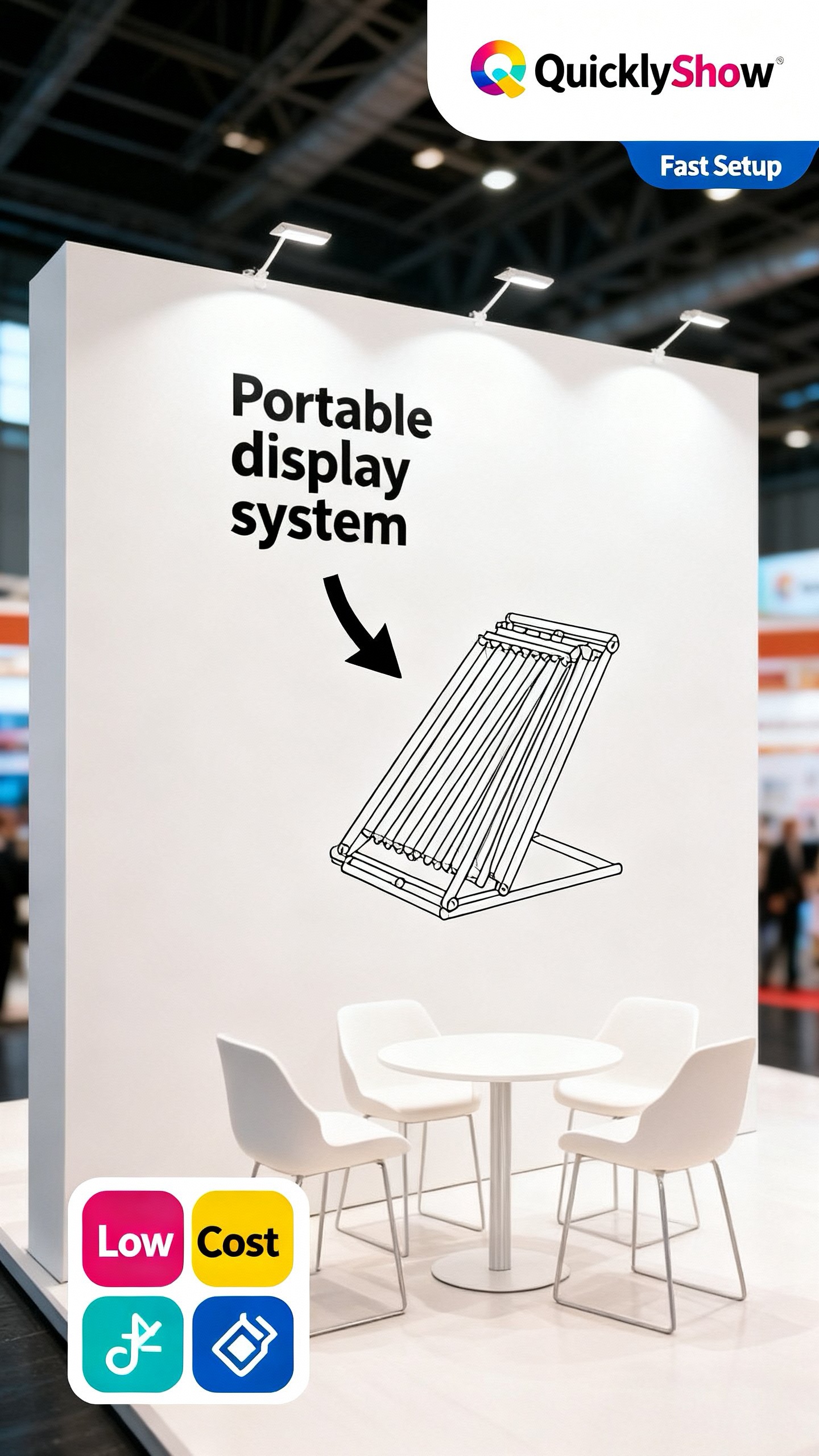
How the system works
Numbered aluminum tubes connect to form the display shape. An elastic fabric graphic fits over or attaches to the frame, creating a smooth visual surface. The main structure can be dismantled into shorter sections for packing and used again with the same or a replacement graphic.
Some of QuicklyShow’s smallest tension-fabric frames start at approximately 2 kg, although size, shape, feet, graphics and accessories change the final weight. Product-specific packed data should be used for freight planning.
Where the sustainability advantage comes from
Reusable aluminum structure
With proper handling and storage, QuicklyShow’s main aluminum structures can typically remain in service for approximately three to five years.
Replaceable communication layer
The fabric graphic can change for a new campaign without discarding the complete frame.
Factory-finished, tool-free assembly
The main frame connects without venue cutting, drilling or painting. Special accessories and venue-regulated work may still require tools or approved professionals.
Compact reusable packing
After the show, components can return to durable zippered Oxford-fabric bags. This supports storage, recovery and repeated transport.
A frequent-exhibitor scenario
An exhibitor starts with a 10×10 backwall and counter. At the next event, the same frame and counter return with a new campaign graphic. For a later 10×20 space, the designer retains those materials and adds the modules required by the larger layout. Nothing about this process requires claiming that the original kit alone becomes a complete 10×20 booth.
On show day, the practical difference is easy to see. The team opens labeled bags, connects the aluminum tubes in sequence and fits the printed textile over the completed structure. After the event, the process runs in reverse. There is no need to cut the main frame apart simply to remove it from the venue.
That routine is where the sustainability benefit either succeeds or fails. If tubes are forced together, wet graphics are packed immediately or bags are left behind, expected service life falls. A reusable design still needs disciplined handling.
For first-time crews, a short factory installation video and one practice assembly can reduce mistakes. Frequent exhibitors should keep the same component numbering and packing layout across events so a different local team can understand the system quickly.
What buyers should verify
- frame material and connection method;
- graphic fabric, printing and finishing;
- actual packed dimensions and gross weight;
- replacement-graphic availability;
- spare connectors, feet and bag availability;
- installation video and crew estimate;
- flame-resistance requirements for the destination venue; and
- end-of-event recovery procedure.
When it may not be the best choice
A tension fabric display may be less suitable when the design changes completely at every event, heavy products require structural support not provided by the display, or the exhibitor has no plan to return and store the frame. Sustainability depends on use, not the product label alone.
Frequently asked questions
How long does setup take?
A trained team can assemble a simple QuicklyShow backwall in approximately 30 minutes. A simple booth can generally be installed in around two hours, depending on configuration and site conditions.
Can the fabric be changed without buying a new frame?
Yes, when the replacement is produced for the same frame dimensions and attachment specification.
Does lightweight always mean lower shipping emissions?
No. Packed volume, distance, transport mode, delivery speed and return logistics also matter.
Choose for several events, not one photograph
A polished booth image shows the result, but buyers should also request the packed view. The number of bags, the longest package and the location of small connectors often matter more to repeat use than the rendering suggests.
Review the 10×10 modular portable booth and contact QuicklyShow with the next several floor plans for a reuse-based configuration.
