
No products in the cart.
What Size Booth Fits a 10×10 Space with a Table and 2 Banners?
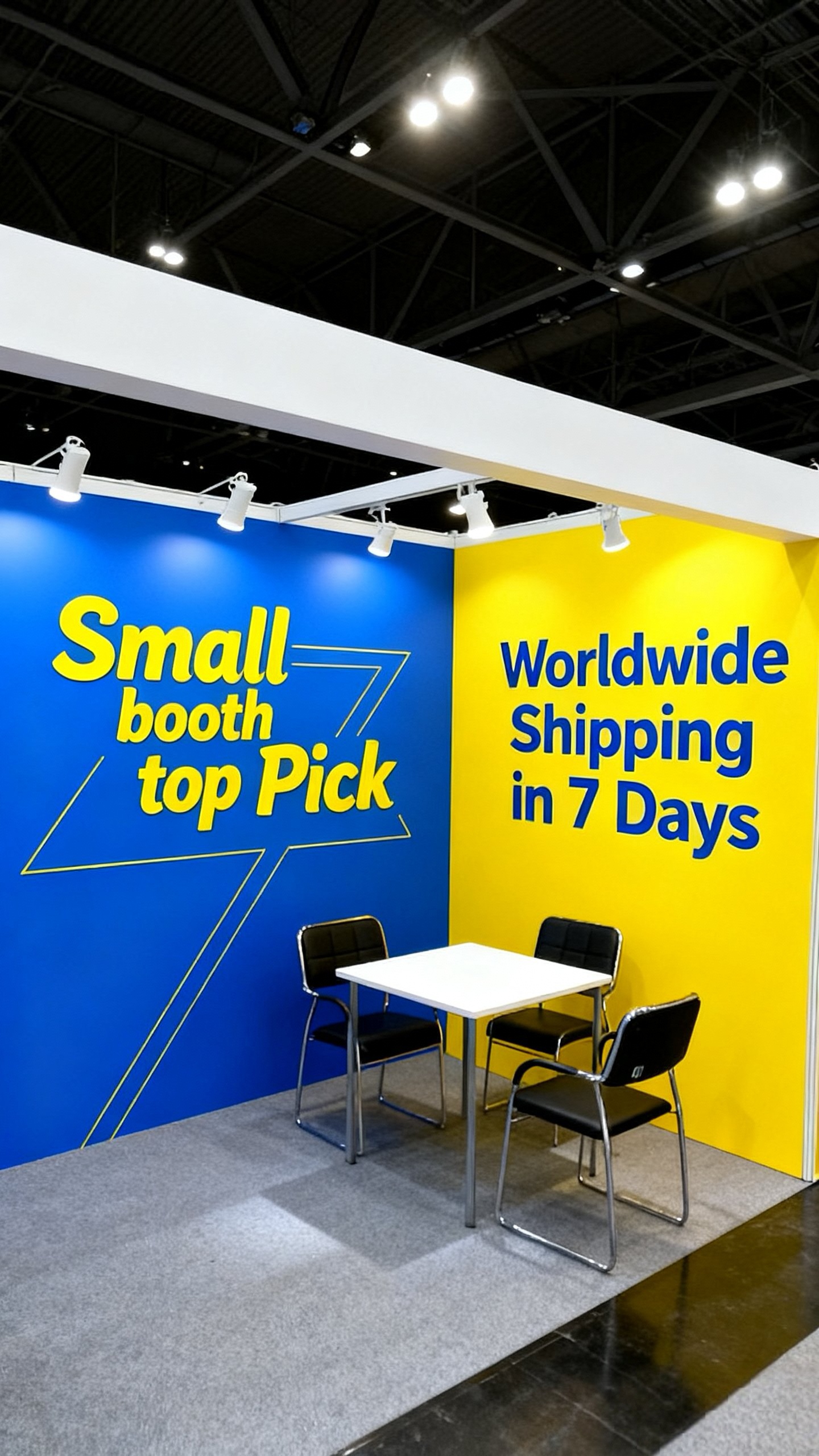
A 10×10 space is a 100-square-foot footprint. A six-foot table and two compact banner stands can fit inside it, but the workable arrangement depends on the table depth, banner bases, staff positions, and visitor activity. Buying a ten-foot-wide display does not by itself solve the layout.
Start with the booked footprint and opening sides. Then draw every item to scale, including the parts that are easy to overlook: feet, counter overhangs, chairs in use, and storage.
Use equipment dimensions, not graphic dimensions
A banner advertised by print width may have a deeper base or projecting feet. Measure the assembled unit. A table listed as six feet long also needs a depth measurement; adding chairs increases its operating area.
Make an inventory with width, depth, height, packed size, and intended position. Mark cables and any demonstration equipment. Ask the organizer about the rules that apply to your booth type before choosing tall displays near neighboring stands.
Try a side-table arrangement
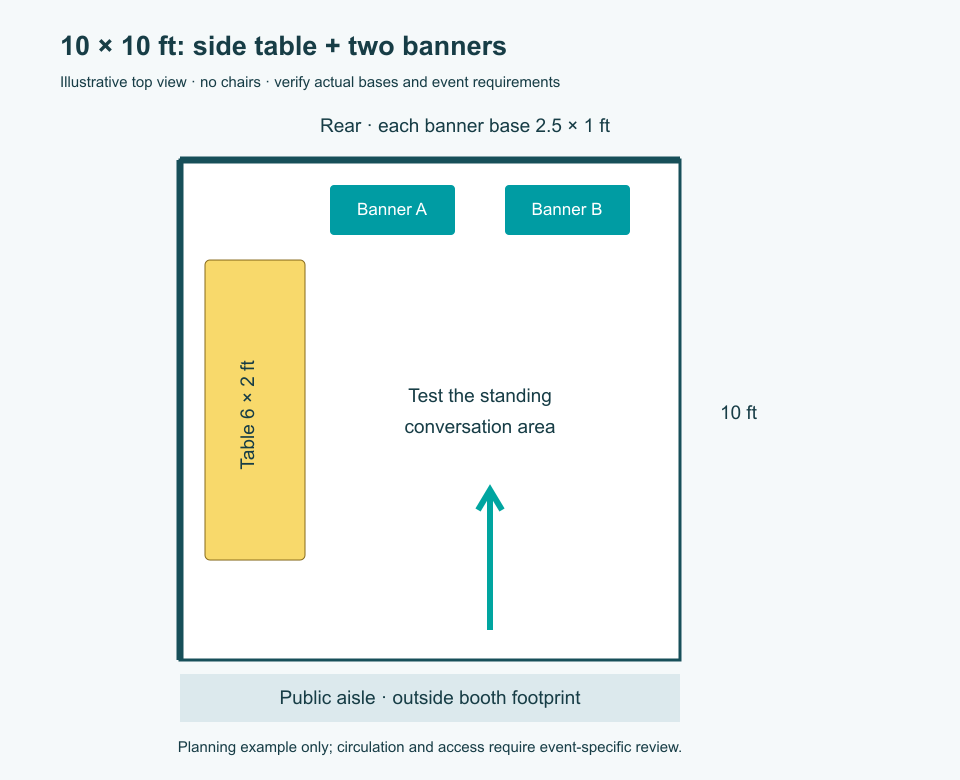
Consider this illustrative 10×10 plan, viewed from above. The rear is at the top and the public aisle is beyond the front boundary.
Place a 6-by-2-foot table along the left side, with its long edge running front to back. One possible position starts half a foot from the left boundary and two feet from the rear. Place two hypothetical banner units, each with a 2.5-by-1-foot base, along the rear wall, starting at three feet and 6.5 feet from the left boundary.
These objects fit geometrically within the sample square. The arrangement leaves the central and right portion available for a standing conversation. It assumes no seated meeting area and no additional counter. It is a planning illustration, not an approved accessibility or fire-safety plan.
Test how people use it
Tape the ten-foot boundaries on a floor. Put the real table and banner bases inside. Ask one person to demonstrate while two others approach, pause, and leave. Keep bags and replenishment stock in their planned locations during the test.
If a visitor must stand in the public aisle to watch the demonstration, change the arrangement or reduce the equipment. If chairs are essential, test them pulled out rather than tucked beneath the table. A fit on paper can fail as soon as people move.
Choose what to remove before adding more
Use the banners for complementary jobs: one identifies the problem you solve, while the other supports the demonstration or next step. Repeating the same headline on both uses valuable space without adding guidance.
Keep the tabletop clear enough for the actual activity. A brochure rack, sample stand, or extra chair should earn its place through use.
Send QuicklyShow your measured table and banner bases when discussing a small trade show booth solution. A scaled layout is a better starting point than choosing equipment by the booth’s width alone.
Frequently asked questions
Can I use an eight-foot table? It may fit, but it reduces your options. Test its depth, chairs, and working area before committing.
Should the table go across the front? That works for some transactions, but it can discourage entry. Choose the position around your visitor activity.
Do I need a ten-foot backdrop too? Only if it serves the message and fits the approved layout. Two banners may already provide enough visual coverage.
