No products in the cart.
Is a 10×10 Booth Worth It for a First-Time Exhibitor?
A 10×10 booth can be worth it for a first-time exhibitor when the event attracts the right buyers and your team can turn conversations into a measurable next step. A small footprint limits space costs and equipment needs, but it does not automatically make an unsuitable show profitable.
Treat your first show as a commercial experiment with a spending ceiling, a target audience, and a follow-up process. The booth is one part of that experiment.
Decide what success means before booking
Choose one primary objective: qualified sales conversations, distributor meetings, product demonstrations, or customer research. “Get exposure” is too vague to guide either spending or evaluation.
Define a qualified contact in advance. For example, the person serves your target market, has a relevant need, and agrees to a follow-up discussion. A badge scan alone does not establish buying intent.
Ask the organizer about audience composition, access to relevant sessions, and exhibitor meeting opportunities. Speak with previous exhibitors when possible. Attendance totals matter less than access to the people you need to meet.
Calculate a break-even target
Use contribution margin, not revenue, to estimate the sales needed to recover the event’s incremental cost.
Break-even customers = total event cost ÷ contribution per additional customer, rounded up.
Suppose your hypothetical all-in cost is $8,400 and the contribution from a new customer over a defined evaluation period is $1,400. You would need six additional customers to recover that cost. Neither figure is a forecast or a typical industry result.
If your planning assumption is that one in five qualified opportunities becomes a customer, the model requires 30 opportunities. That assumption needs your own evidence. Stress-test a lower conversion rate and a longer sales cycle before deciding the budget is comfortable.
Match the booth to the experiment
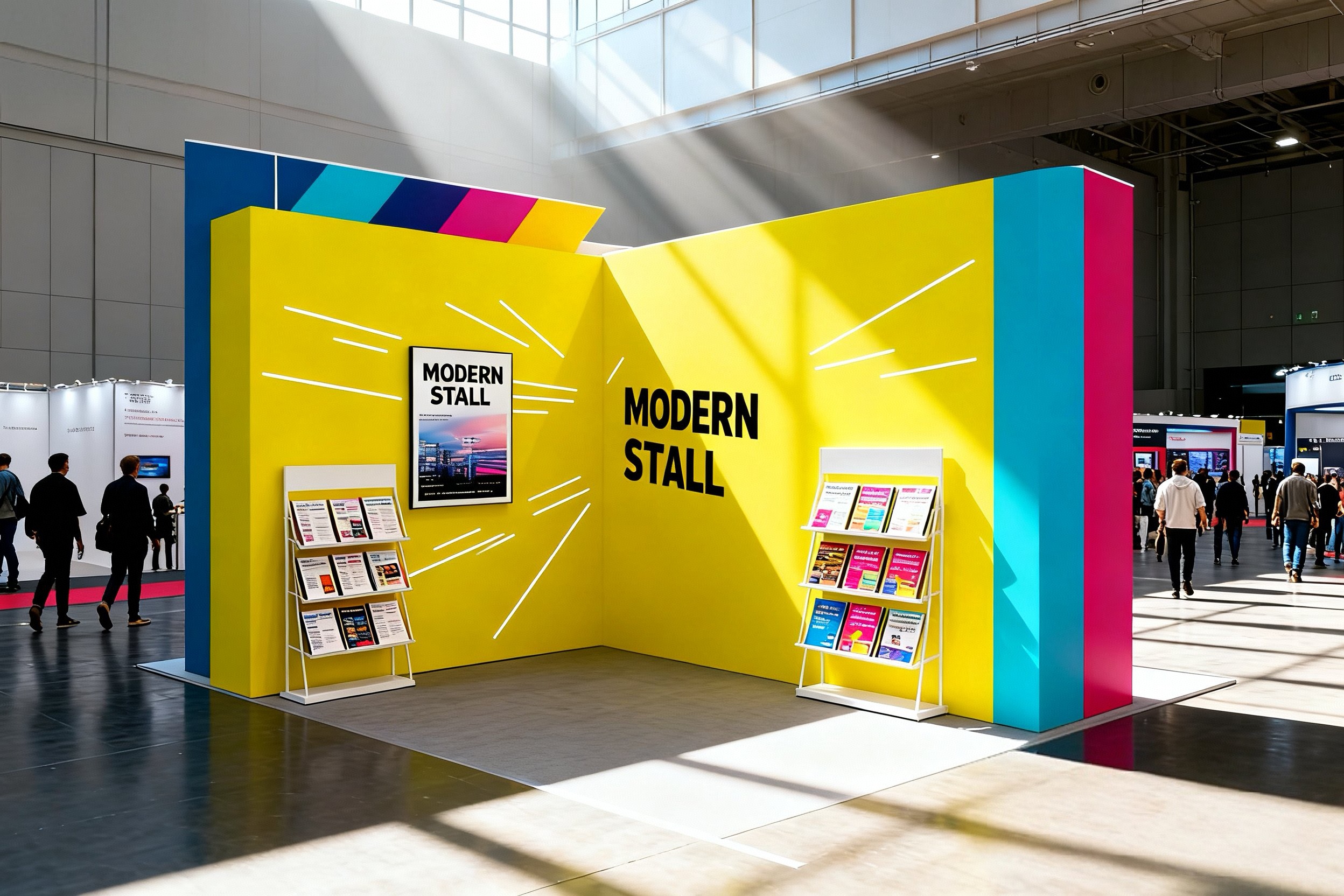
A first 10×10 trade show booth rarely needs to present every product. Build around one visible promise, one demonstration, and one way to capture an agreed next action.
Keep the entrance usable. A large table across the entire front can turn a small space into a barrier. Use a compact counter or a side-positioned table where the approved layout allows it. Test the arrangement with staff and equipment before ordering graphics.
Count learning without using it to excuse everything
Track repeated buyer questions, objections, and competing alternatives. Those findings can improve your messaging even if sales arrive later. However, separate research value from sales return rather than adding an invented dollar value to every conversation.
Assign an owner and deadline for follow-up before the team travels. Review booked meetings, qualified opportunities, and eventual contribution after the agreed period.
QuicklyShow can help scope a small trade show booth solution around your demonstration and transport needs. Start with the objective and spending limit so the display supports the test you actually want to run.
Frequently asked questions
Should a startup buy or rent first? Compare the complete cost for your expected number of shows, including storage and logistics. Neither option always wins.
How many leads should I target? Work backward from contribution, conversion assumptions, and staff capacity. There is no universal good lead count.
Can I judge success on the final show day? You can assess activity immediately; sales outcomes may need a longer, predefined review period.
