
No products in the cart.
Modular Trade Show Booths: Flexible, Reusable Solutions for Frequent Exhibitors
A modular trade show booth uses standardized, reusable components that can be rearranged for different exhibition spaces. Instead of rebuilding a stand for every event, exhibitors can reuse frames, lightboxes, fabric walls, counters and accessories while changing the layout or graphics. This makes modular booths especially useful for brands attending multiple shows each year.
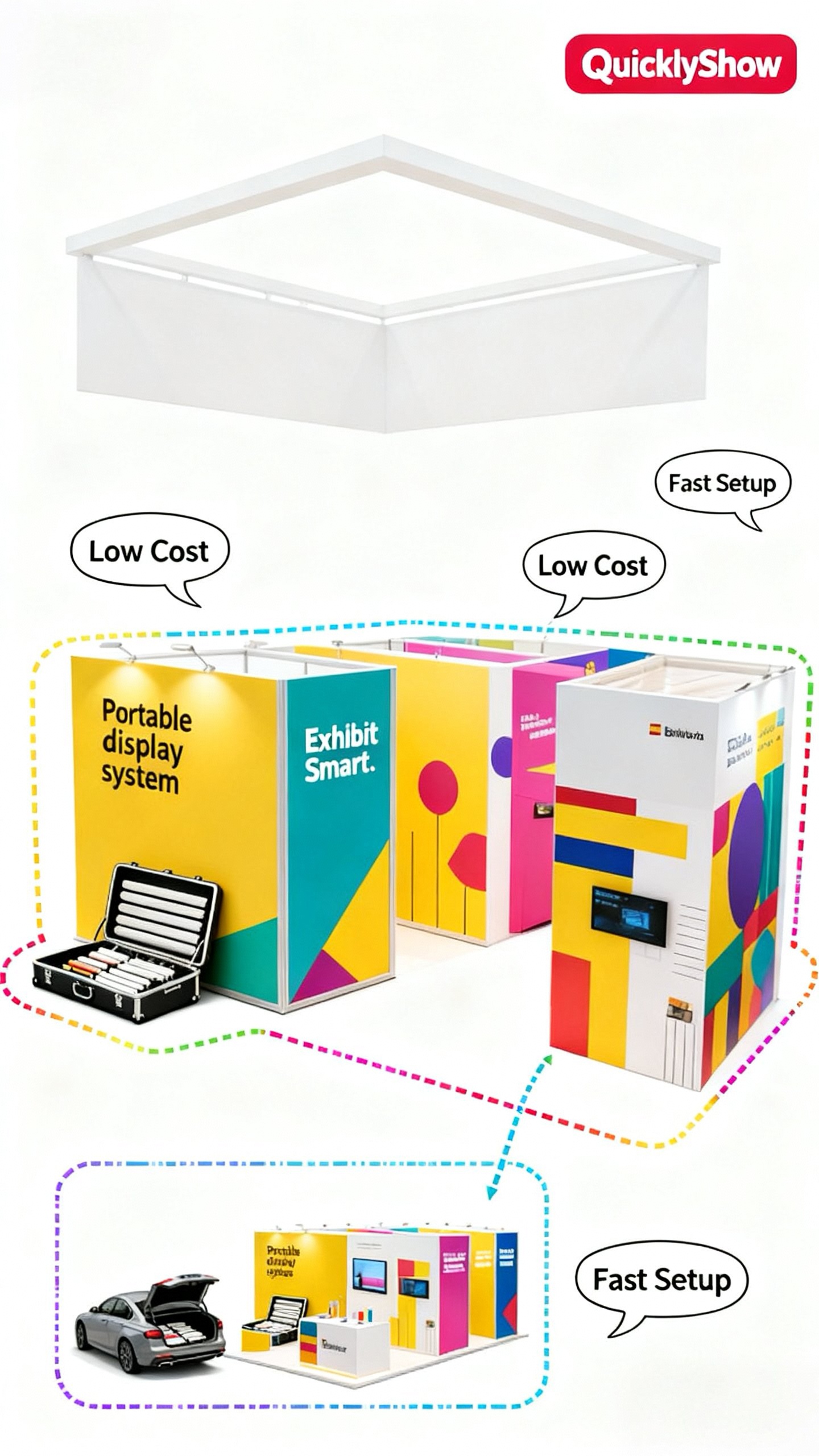
ALT: Modular trade show booth system that can be rearranged for different exhibition spaces
How a modular booth system works
The system begins with compatible structural modules. Straight frames form walls; corner connectors change direction; overhead elements add visibility; counters, shelves and screens support engagement. Printed fabric or SEG graphics create the finished visual surface. Because the parts share connection standards, a core inventory can produce more than one layout.
For example, a brand may use a backwall and counter in a 10×10 inline space, add a second wall for a 10×20 corner booth, and combine additional modules for a larger peninsula or island. The exact conversions depend on the chosen system, so they should be planned before purchase.
Why frequent exhibitors choose modular displays
Reuse across events. Durable hardware can support multiple campaigns and locations.
Layout flexibility. Components can respond to different booth sizes and numbers of open sides.
Selective updates. A company can replace campaign graphics while retaining most of the structure.
Predictable setup. Teams become familiar with the same connectors, cases and assembly sequence.
Scalable investment. Additional modules can expand the system as the exhibition program grows.
Modular does not mean generic
A modular booth can still create a distinct branded environment. Custom graphics define color and messaging, while lighting, arches, towers, counters and product displays shape the visitor experience. The key is to design a visual kit of parts—not just a mechanical kit of parts.
Create rules for logo position, primary message, product zones and lighting. Then test those rules across expected footprints. This keeps the brand recognizable even when the layout changes.
Plan around your real event calendar
Before choosing a system, list the shows you expect to attend over the next 12–24 months. Record each footprint, open sides, maximum height, transport route and functional needs. Identify the smallest set of components that can cover most scenarios.
Do not assume every venue uses the same regulations. Overhead structures, enclosed areas, lighting, fire performance and electrical work may require approval. The display system should be adaptable, but each layout still needs to comply with the specific event manual.
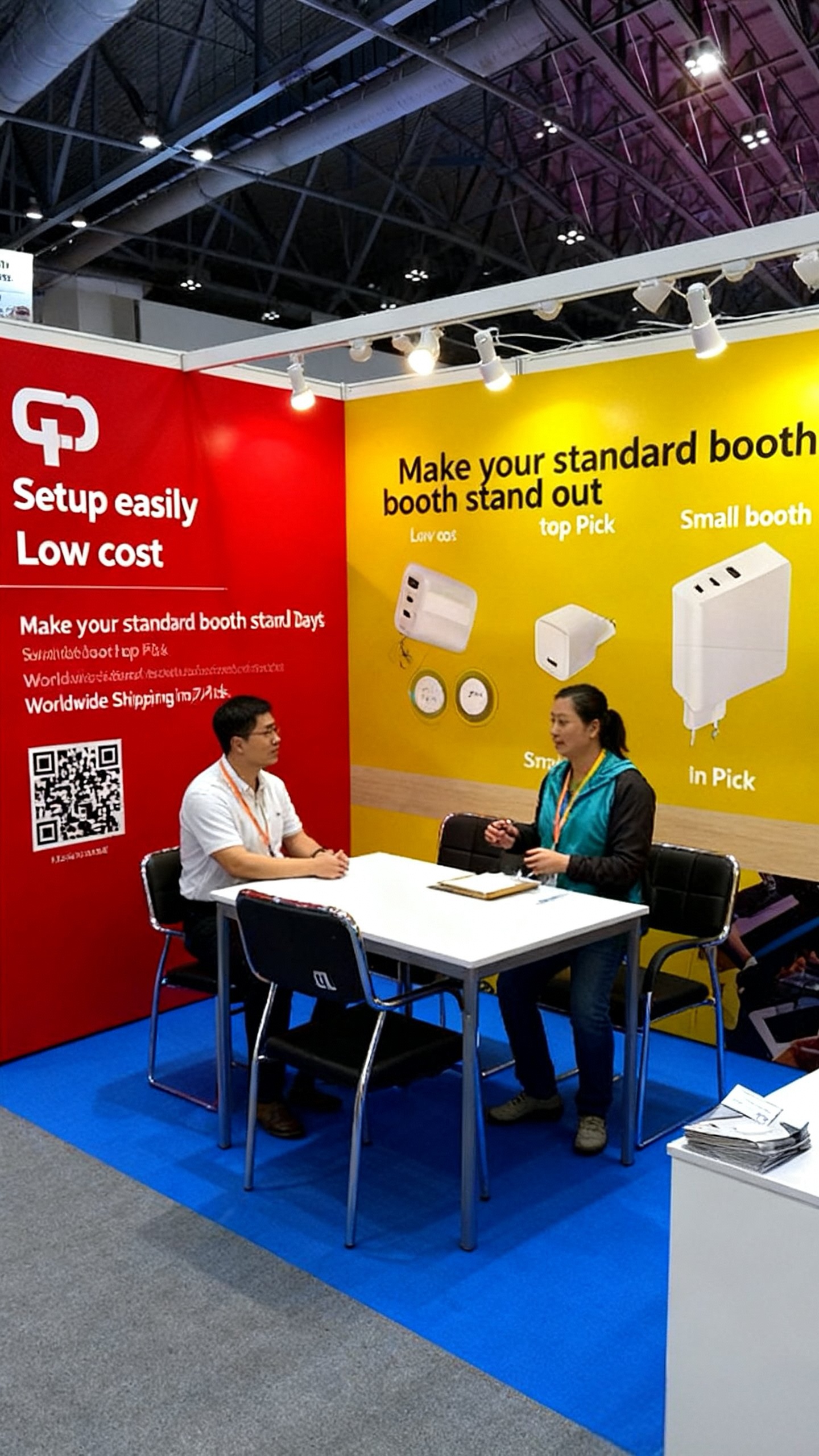
ALT: Reusable modular trade show booth with changeable printed fabric graphics
What to evaluate before buying
Structural compatibility
Ask which profiles and connectors are shared across modules. Request drawings of the configurations you intend to build. Confirm load limitations before mounting screens, shelves or overhead elements.
Graphic replacement
Verify that individual graphics can be reordered. Store approved dimensions and artwork templates so future teams do not have to recreate specifications.
Packing strategy
A modular system is only efficient if parts can be located quickly. Cases should be numbered, and components should be labeled to match the assembly guide. Compare packed volume and weight for every planned configuration.
Lighting and power
Plan lighting as a reusable subsystem. Confirm voltage compatibility for international events and provide safe cable paths that do not interfere with visitor movement.
Expansion and support
Ask whether modules will remain available and how replacement parts are identified. A supplier should be able to provide an inventory list and help plan future expansion.
Modular booth versus custom-built booth
| Factor | Modular booth | Traditional custom build |
|---|---|---|
| Reuse | Designed for repeated use | Often event-specific |
| Layout changes | Supported within the system | May require rebuilding |
| Packing | Engineered into cases | Often needs specialist freight |
| Visual customization | Graphics and accessories | Broad material and shape freedom |
| Best fit | Repeat programs and changing spaces | Landmark projects with unique construction needs |
The right choice depends on the event strategy. Some exhibitors use a modular core with selected custom elements, gaining operational efficiency without sacrificing visual character.
Working with QuicklyShow
QuicklyShow provides modular aluminum-frame and fabric display solutions for standard and customized exhibition footprints. A project can combine reusable walls, backlit elements, counters and other accessories. Planning several layouts at the beginning helps determine the right component inventory and reduces unnecessary purchases.
Frequently asked questions
Can one modular booth fit both 10×10 and 10×20 spaces?
Potentially, yes, if the system is designed for those conversions. Ask the supplier to document both layouts and the components used in each.
How often should fabric graphics be replaced?
Replace them when messaging changes or when wear affects presentation. Proper cleaning, rolling or folding according to instructions, and dry storage help extend their usable life.
Are modular booths suitable for international exhibitions?
They can be, especially when compact packing and repeatable assembly matter. Confirm venue rules, electrical compatibility, freight method and local installation requirements for every event.
Related QuicklyShow resources
- See a 10×20 modular trade show booth.
- Explore a 10×10 portable modular booth solution.
- Review a modular LED and SEG booth.
- Learn how tool-free booths reduce setup labor.
- Plan a reusable booth system.
Design one system for more than one show
Send QuicklyShow your expected booth sizes, brand assets and annual event plan. A modular proposal can show how a shared set of components supports several layouts and where additional modules may be needed.
