
No products in the cart.
How to Design a Low-Waste Trade Show Booth Without Sacrificing Visual Impact
A low-waste trade show booth does not need to look temporary or plain. Strong graphics, illuminated focal points and clear zoning can create visual impact while reusable structures, replaceable surfaces and tool-free assembly reduce what is discarded after the event.
ALT: Tool-free low-waste trade show booth with a reusable portable display wall
At closing time, a low-waste booth follows a different path from a disposable build. The crew removes the fabric graphics, disconnects the identified fittings and returns the aluminum frames to their bags. The complete wall is not broken apart and sent to a waste container; only damaged, obsolete or genuinely non-reusable items enter the disposal stream.
Start with the next three events
Designing only for one floor plan encourages custom parts that may never be used again. Begin with the smallest expected booth, then identify modules that expand it. Standard wall widths, common connectors and interchangeable counters make the inventory easier to reuse.
QuicklyShow's modular aluminum components can be separated and recombined for different booth areas and layouts. The frame remains the long-life layer; the fabric graphic becomes the changeable communication layer.
Create impact with graphics, light and height
Visual presence does not require disposable sculptural construction. Consider:
- one uninterrupted tension-fabric message wall;
- an illuminated SEG or pop-up lightbox as the focal point;
- a consistent overhead line within venue rules;
- strong color blocking and a short headline;
- a reusable reception counter; and
- open circulation instead of excessive partitions.
Selected QuicklyShow lightboxes use integrated high-brightness, energy-efficient LED modules. Frames can be retained while fabric graphics change for new products or languages.
Buyers comparing illuminated structures can review the different types of backlit trade show displays and then match the display type to the booth layout, event frequency and budget.
The image below shows the complete expandable aluminum support structure during a factory lighting test. With the fabric graphic removed, the reusable frame, cross-bracing and LED modules remain visible as separate long-life components.
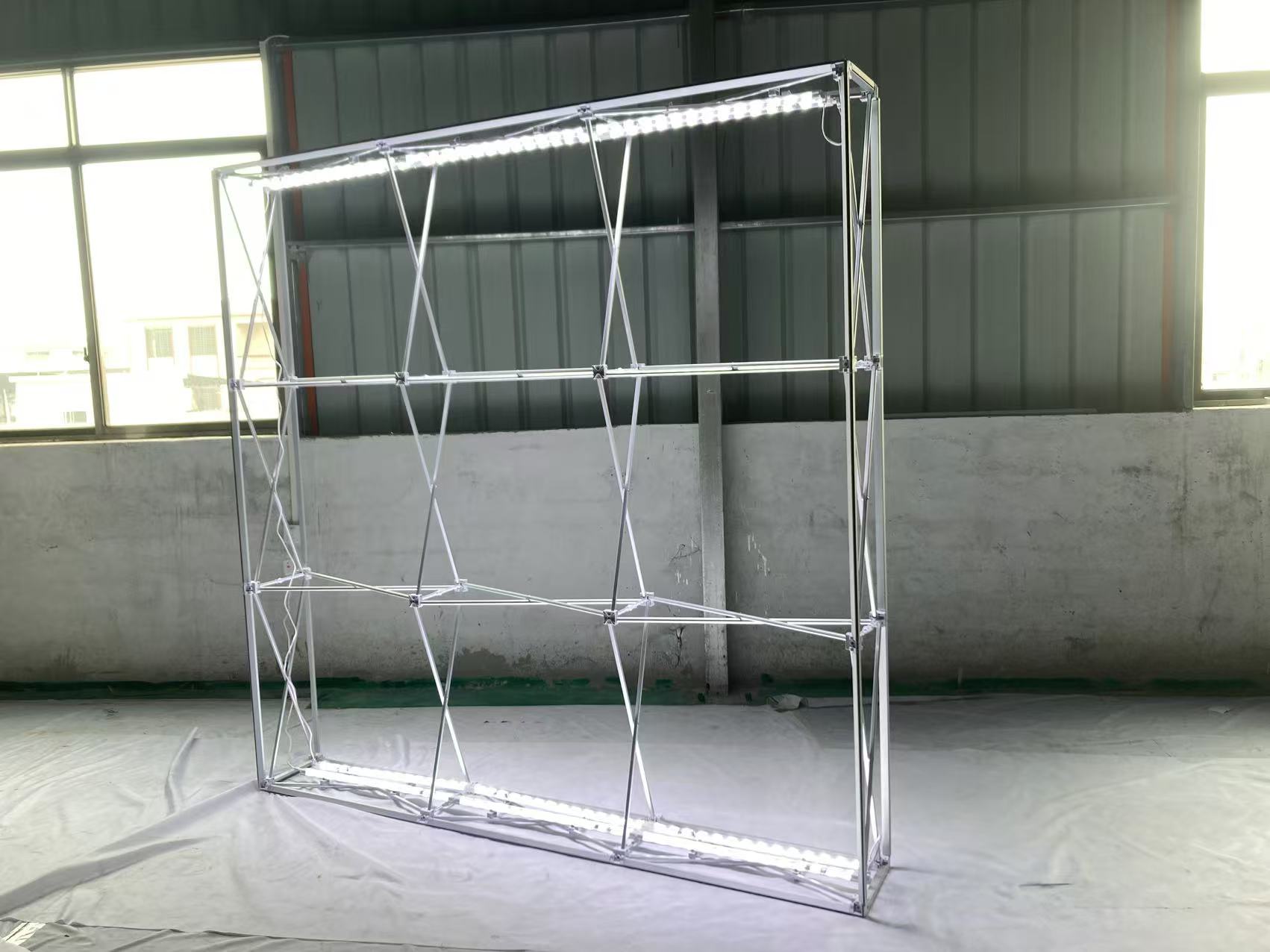
ALT: Reusable expandable aluminum pop-up lightbox frame with upper and lower LED modules illuminated during factory testing
Eliminate waste at the installation stage
Specify factory-finished, tool-free components. This reduces the need for cutting, drilling and painting on the show floor. Numbered or identified connections also help crews assemble the booth without modifying parts. Factory pre-assembly, photographs and video confirmation can identify problems before international shipment.
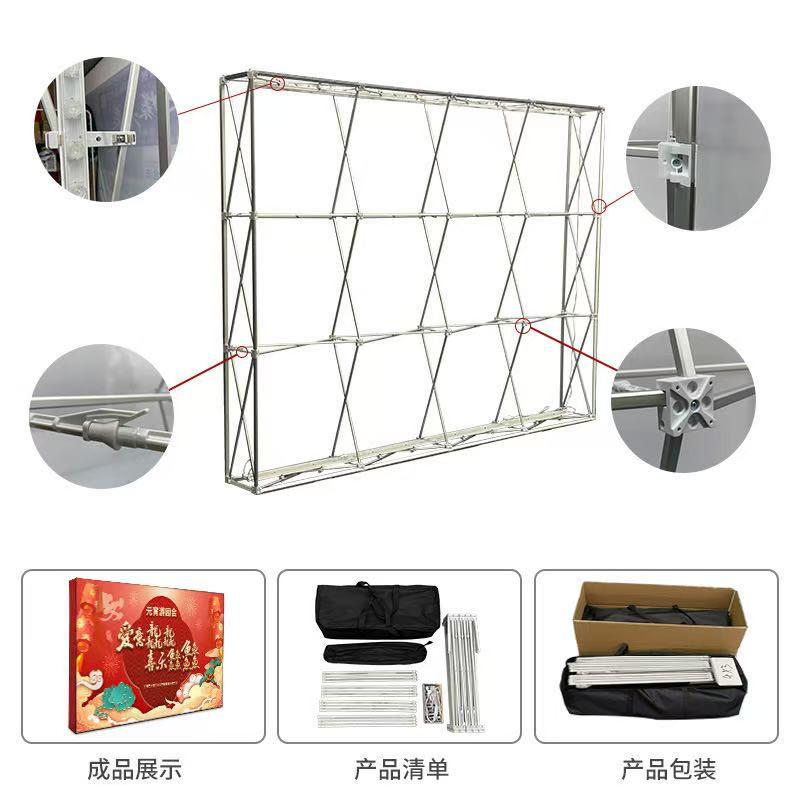
ALT: Expandable pop-up lightbox frame with connector details, component list and reusable packing bags
Numbering the individual profiles adds another practical control. The installer can match each piece to the instructions, while the dismantling crew can use the same numbers as an inventory check before the bag leaves the venue. This reduces missing parts and supports reuse at the next event.
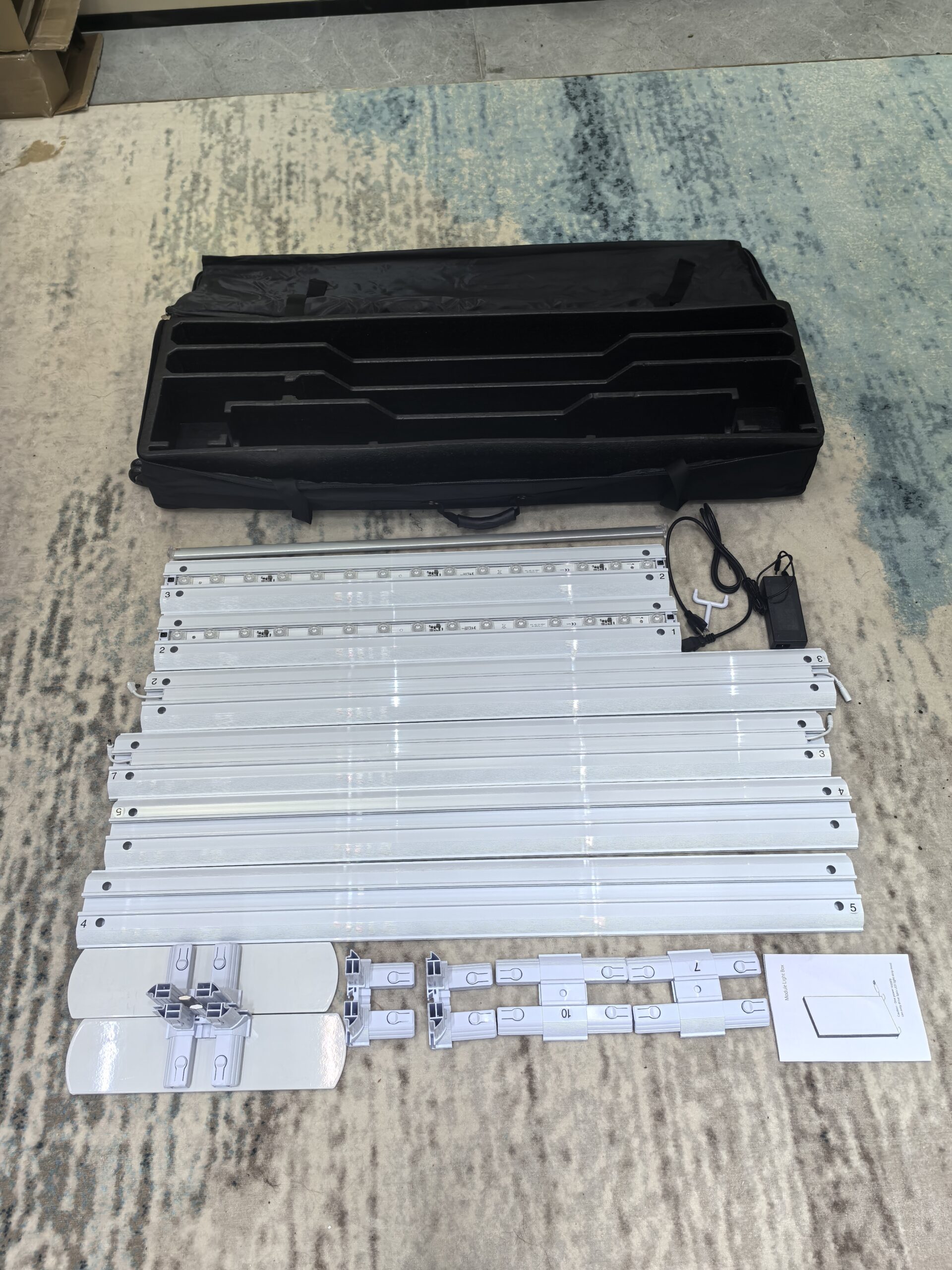
ALT: Numbered aluminum profiles, LED modules and connectors arranged before portable lightbox assembly
Separate permanent and campaign-specific components
Create two lists in the design file:
Retained: aluminum frames, connectors, lights, cables, counters, bags and reusable accessories.
Variable: printed graphics, event-specific messages, samples and consumables.
This prevents a campaign update from turning into a full booth replacement. It also creates a clearer waste record after dismantling.
Plan packaging as part of the booth
Every module needs a labeled storage position. QuicklyShow typically packs individual display frames in portable bags and outer cartons and generally controls component package length within 1.3 meters. Compact packaging helps handling, but its environmental value increases only when bags and usable cartons return with the booth.
Measure instead of guessing
To test a "solid waste below 15%" target, weigh:
- all booth materials entering the venue;
- all items retained for reuse; and
- all items discarded after dismantling.
Record what is excluded, such as client samples or catering waste. Repeat the measurement on representative booth configurations. This creates defensible evidence for future environmental communication.
An easy first test is a typical 10×10 ft configuration. Photograph the materials before installation, weigh the shipment, and place every discarded booth-related item in a separate container after dismantling. The record may reveal that a graphic or damaged carton-not the aluminum structure-is the main source of waste, giving the team a specific improvement target for the next event.
A low-waste design brief
Ask the supplier to deliver:
- drawings for at least two future layouts;
- a bill of materials and component inventory;
- independent graphic replacement files;
- packed dimensions and gross weights;
- assembly time, crew and tool requirements;
- electrical specifications for illuminated elements;
- replacement-part availability; and
- a dismantling and recovery checklist.
Frequently asked questions
Does a low-waste booth have to avoid printed fabric?
No. Fabric can provide a large seamless visual surface. The key is retaining the frame and replacing graphics only when necessary.
Is tool-free assembly important?
Yes. It can reduce venue fabrication, simplify recovery and lower the risk of parts being altered during installation.
Can a booth be called zero waste?
Only with a clearly defined boundary and measured outcome. "Designed to minimize on-site waste" is more accurate before verification.
Turn the design into a repeatable system
Compare Reusable Trade Show Booths and Modular vs. Traditional Booths. Contact QuicklyShow for reusable layout options and pre-shipment assembly evidence for a custom project.
