No products in the cart.
Are Portable Trade Show Booths Eco-Friendly? A Practical Buyer’s Guide
Portable trade show booths can be an eco-friendlier alternative to repeatedly built disposable stands when their main structures are durable, reused often and packed efficiently. Portability by itself is not proof: buyers must verify materials, service life, graphics, lighting and what happens after dismantling.
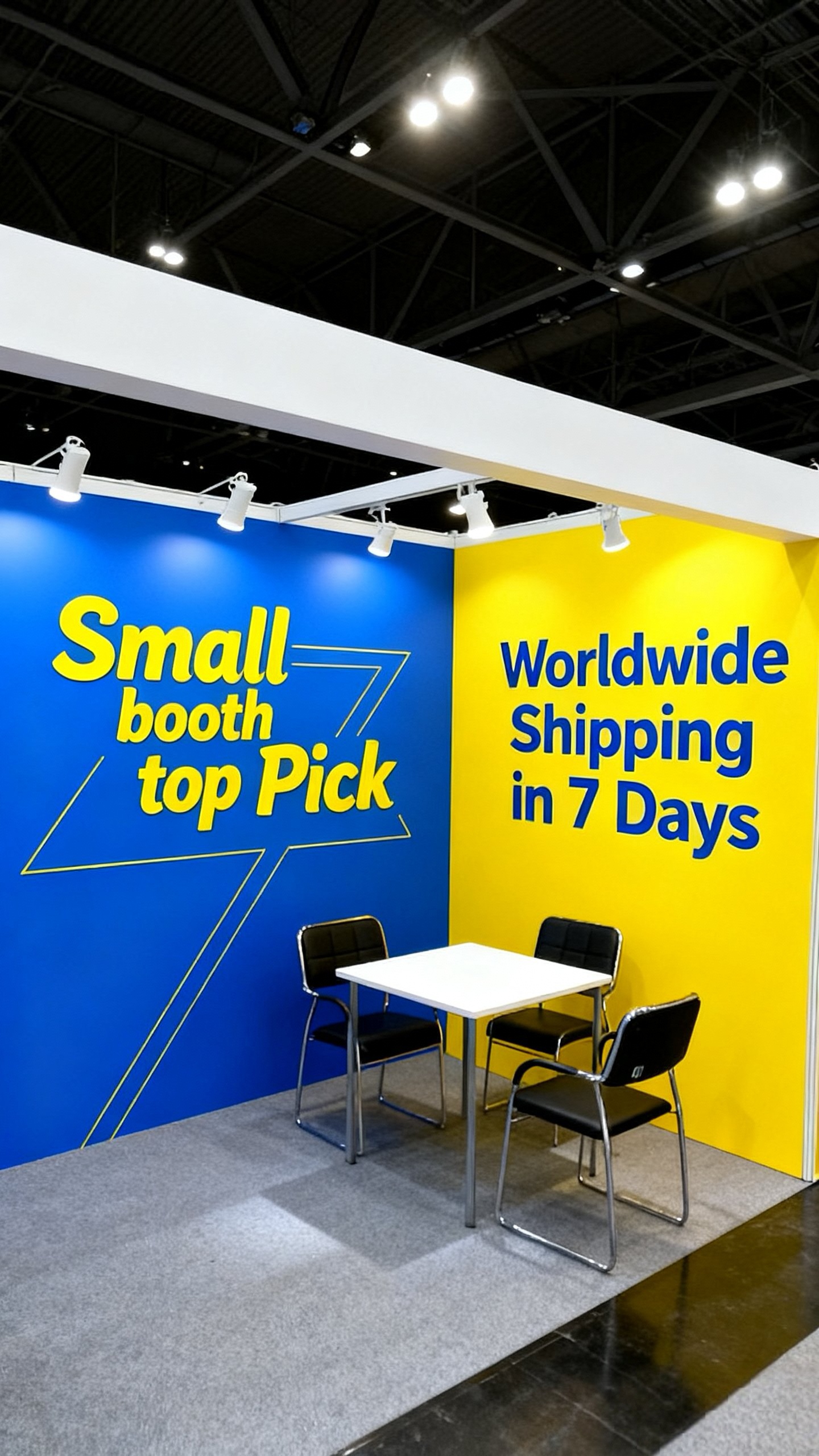
ALT: Lightweight portable trade show booth with reusable aluminum wall frames
Picture the difference at the loading area. One booth requires bulky crates and dedicated freight handling. Another is divided into labeled portable bags and compact cartons that can fit into a car for a small configuration. The second option is not automatically "green," but its lighter, reusable hardware gives the exhibitor more practical transport and recovery choices.
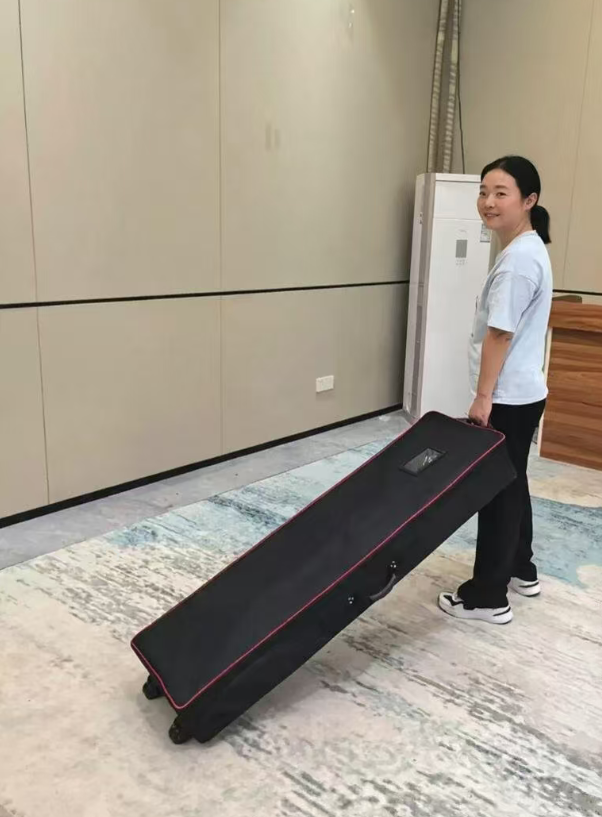
ALT: One person moving a packed portable display system in a reusable wheeled carry bag
When a portable booth has an environmental advantage
The strongest case is a repeat exhibitor using one hardware inventory across several shows. The frame travels, the layout changes and only campaign-specific graphics are replaced. Compared with rebuilding walls for each event, this model can reduce material purchases and venue waste.
QuicklyShow's aluminum booth structures are designed to be dismantled and reused. With appropriate handling and dry storage, the main hardware can typically remain in service for about three to five years. Modules can be separated or combined for different footprints, so a change in floor space does not always require a completely new booth.
Seven questions to ask before buying
- Which parts are reused? Ask the supplier to distinguish frames, connectors, lights, graphics, bags and cartons.
- How many layouts can the inventory create? Request drawings for every expected footprint.
- Can graphics be replaced independently? Long-life hardware should not be discarded because branding changes.
- What are the packed dimensions and weights? Compact packages improve storage and handling decisions.
- Does installation require cutting or painting? Factory-finished, tool-free systems can reduce venue pollution.
- How is lighting specified? Look for efficient LEDs and destination-appropriate voltage and plugs.
- What evidence supports environmental claims? Ask for material, electrical and waste records rather than broad labels.
Lightweight does not automatically mean low carbon
A lighter, smaller booth may require less freight capacity than a bulky conventional build. QuicklyShow generally controls component package length to within 1.3 meters, and individual display frames are packed in portable bags and outer cartons. Some systems can be moved by car or public transport rather than requiring a truck.
The photograph above demonstrates handling of one packed display unit, not an entire multi-wall booth shipment. The number of people and vehicle type still depend on the complete order's quantity, packed dimensions and gross weight.
However, actual emissions depend on total shipment weight, distance, delivery speed and transport mode. Air express and ocean freight have different lead-time and emissions profiles. Do not publish a percentage reduction without comparing real shipments.
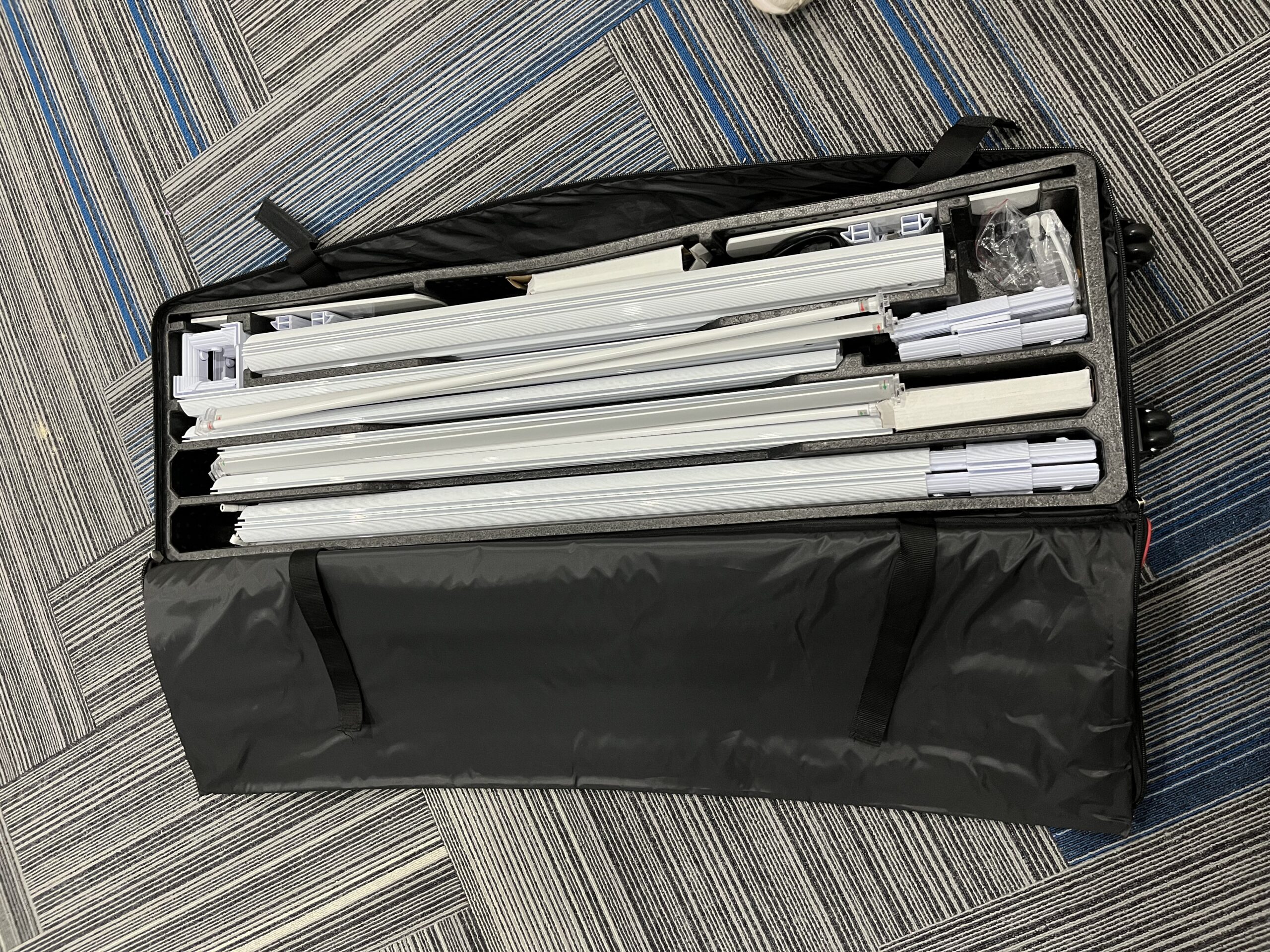
ALT: Aluminum lightbox profiles, connectors, cables and accessories organized in a reusable carry case
The same type of portable system can also be checked as a complete component set before assembly. Numbered aluminum profiles, integrated LED modules, feet, connectors, power supply, instructions and the carry bag can be laid out and inventoried. This makes it easier to confirm that every part is recovered after the show instead of treating the display as disposable construction.
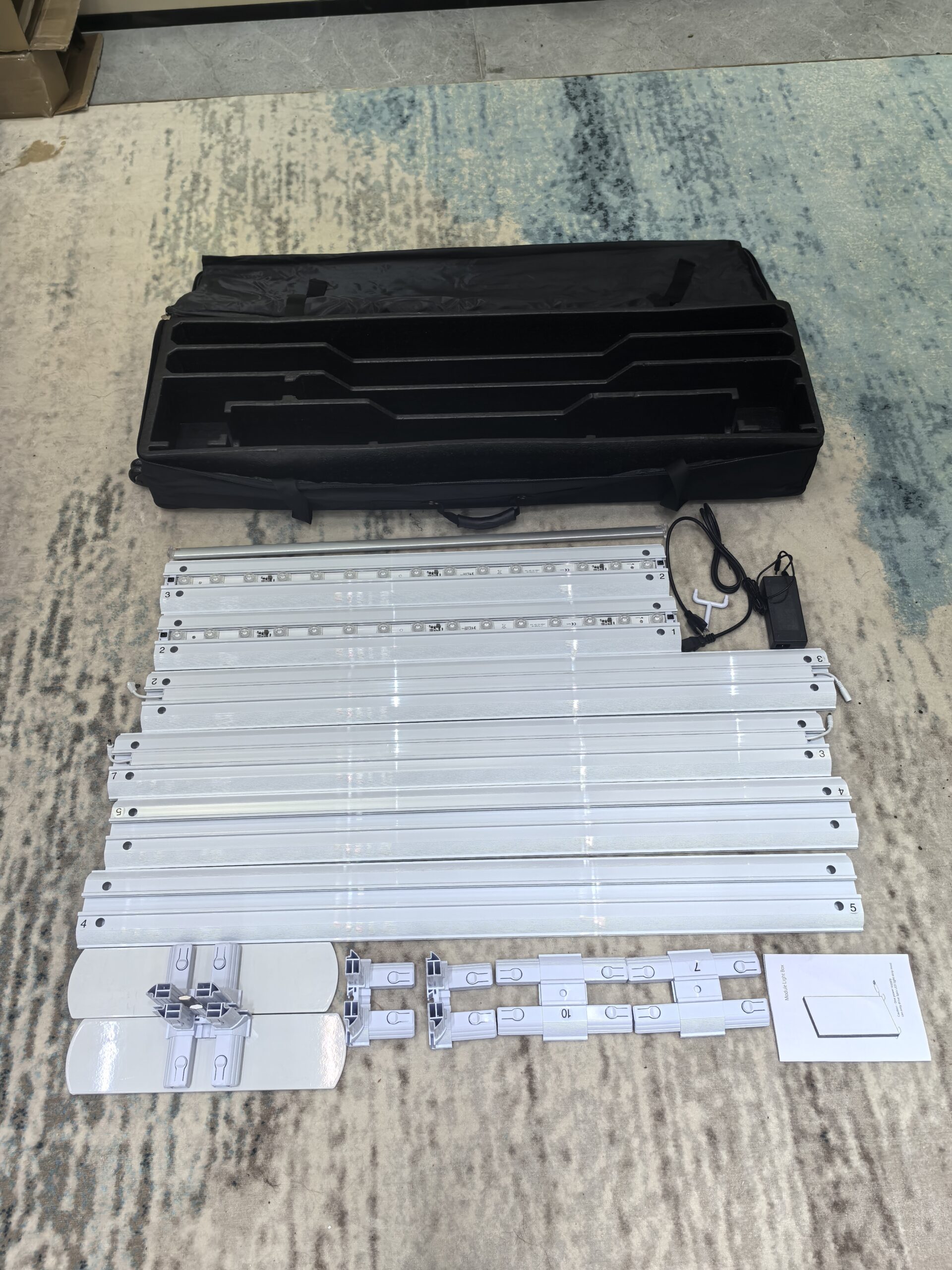
ALT: Numbered aluminum lightbox profiles with LEDs, feet, connectors, power supply, instructions and reusable carry bag
What about fabric graphics and LEDs?
Elastic, wrinkle-resistant fabric graphics produced by dye-sublimation printing can be reused while the campaign remains current. When the message changes, the fabric can be replaced without replacing the aluminum frame. Selected SEG and pop-up lightbox systems use integrated high-brightness LEDs, with 110V or 220V configurations available according to the exhibition location.
Buyers should still request applicable documentation for fabrics, inks, adhesives, flame resistance and electrical components. "Energy-efficient LED" is a product feature; "carbon-neutral lighting" would require a broader calculation.
Warning signs
- The supplier calls every portable product sustainable without explaining reuse.
- The booth is reusable, but custom parts cannot fit another layout.
- Replacement graphics or spare connectors are unavailable.
- Waste is claimed to be below 15% without any weighing method.
- "100% recyclable" includes mixed graphics, wiring and electronics without evidence.
- Carbon-neutral language appears without a carbon inventory or verification.
A practical buying specification
Ask for a bill of materials, reuse plan, packed data, assembly video, spare-parts list, electrical specification and graphic replacement price. Include at least two future booth layouts in the quotation. This changes sustainability from a marketing adjective into a purchasing requirement.
QuicklyShow pre-assembles customized products before shipment, then provides photographs or video for customer confirmation. A skilled team can assemble one display backwall in around 30 minutes, while a simple booth can generally be completed in about two hours, depending on configuration and crew experience. Buyers can also review the pop-up backdrop setup guide before arriving at the venue.
A real pre-shipment inspection example
For a U.S. customer's 3-meter pop-up lightbox, two QuicklyShow team members completed the test assembly in approximately 30 minutes. They checked the expandable frame, connected and illuminated the LED system, and recorded the finished unit before dispatch. This kind of inspection does not by itself prove an environmental result, but it shows that the product can arrive factory-tested and be assembled without building a new wall at the venue.
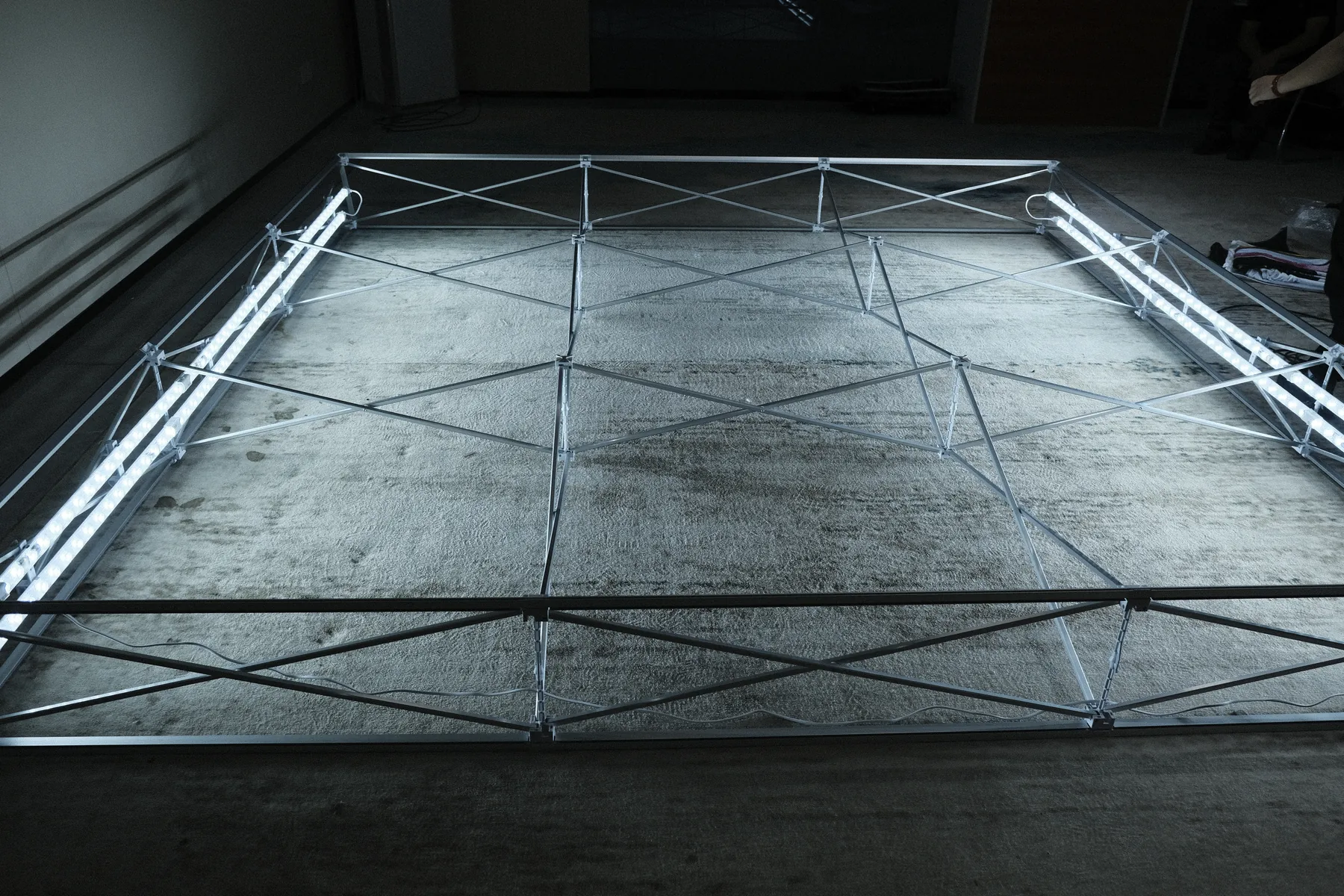
ALT: Two-person pre-shipment LED test of a 3-meter pop-up lightbox for a U.S. customer
Frequently asked questions
Are portable booths always better than rental booths?
Not always. Annual event count, freight, storage, local labor and reuse frequency determine the better option.
Can the packaging be reused?
Portable bags are intended for repeated transport. Outer cartons may also be retained when their condition and the shipping route allow it.
Can I call the booth carbon-neutral?
Not from product design alone. Carbon neutrality requires a defined calculation, reductions, treatment of residual emissions and suitable verification.
Compare the complete lifecycle
Continue with What Is a Green Trade Show Booth? and Modular vs. Traditional Trade Show Booths. Compare a 10×10 portable booth with display counter and contact QuicklyShow for configuration, package and graphic-replacement information.
