
No products in the cart.
Portable Event Tent Case: A Coordinated Canopy, Back Wall and Half Sidewalls
A portable event tent can bring a canopy, branded graphics and a practical reception area into one display. This example shows how a folding tent structure and coordinated fabric panels create a defined space for product introductions and visitor conversations.
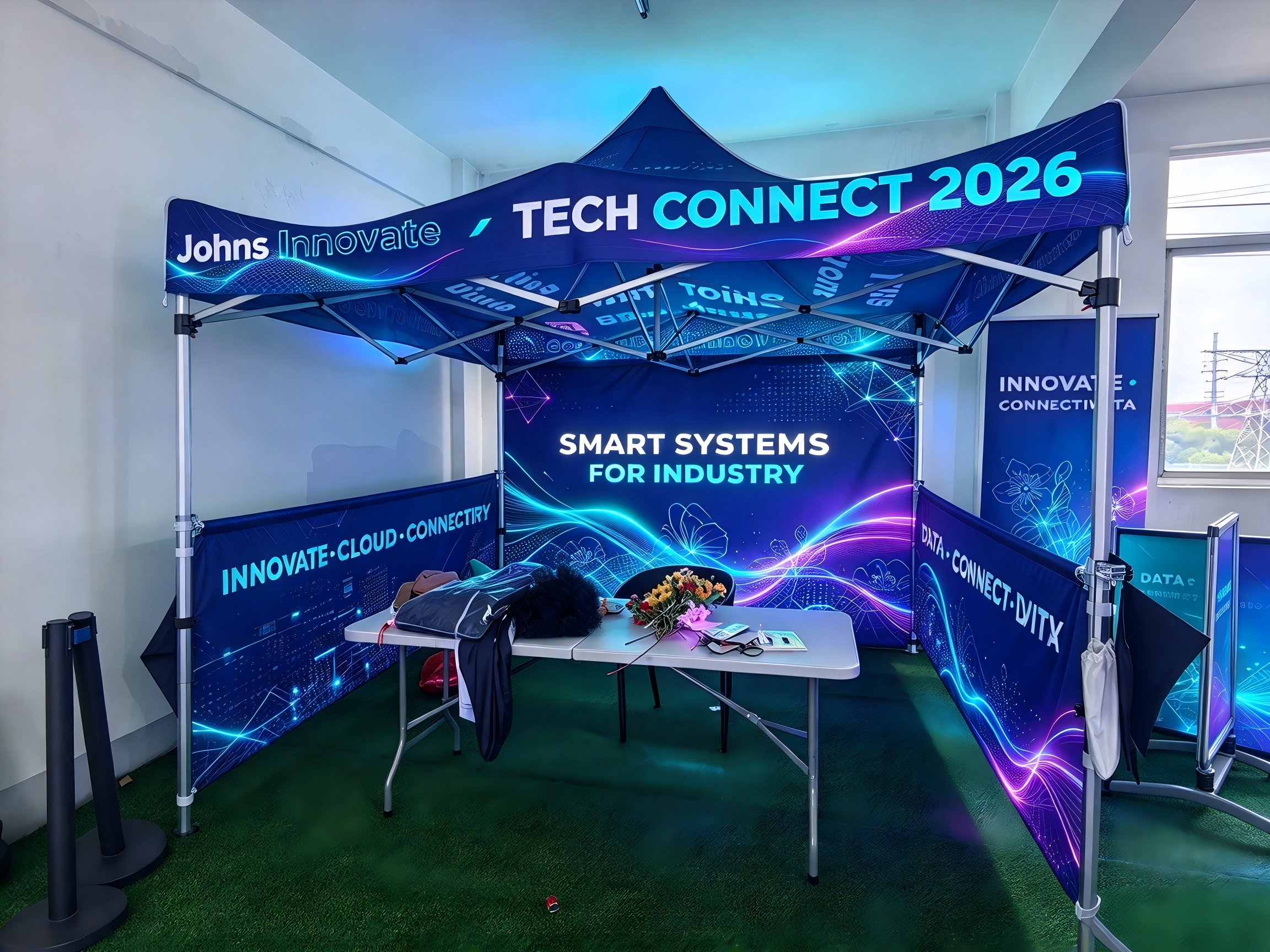
The supplied image shows the tent assembled indoors. A printed canopy, full-height rear graphic and two half-height sidewalls surround a table area, while the front remains open for access.
A Consistent Graphic Theme Across the Tent
The canopy and wall panels share a dark blue background with cyan and purple graphic accents. Repeating these colors across the different surfaces gives the display a consistent identity.
Each surface serves a different purpose. The front canopy valance carries the most prominent heading. The rear wall provides a large central message, while the half sidewalls add supporting text along the edges of the space.
For a similar project, prepare artwork using the production template for each component. Keep important text clear of seams, attachment points and areas that may be hidden by the frame or furniture.
Folding Frame and Fabric Panels
The image shows a folding frame with crossed members beneath the canopy and upright legs at the corners. This structure supports the roof and provides attachment locations for the surrounding panels.
The rear wall forms a visual backdrop behind the table. Half-height sidewalls define the sides while leaving the upper area open.
These components should be specified as a compatible set. Before ordering, confirm the frame model, canopy fit, panel dimensions and attachment method. The photograph does not establish the exact frame material, fabric specification or packed dimensions.
Plan the Interior Around Its Purpose
A table occupies much of the interior in this example. For an event-ready arrangement, its position should reflect how staff intend to use the space.
A table near the front can support registration, brochures or sample distribution. A table farther inside can leave more room for visitors to step under the canopy and talk.
Keep the entrance clear, and check the layout with staff, chairs and display materials in position. Personal belongings and spare packaging should have a storage location so that the working surface remains available.
Assembly Planning for a Similar Tent
1. Check the components and location
Identify the frame, canopy, wall panels and required securing equipment before assembly. Check that the available space accommodates the complete structure and leaves room around the legs.
2. Open the frame using the specified procedure
Follow the product instructions and use the recommended number of people. Expand the frame evenly, keeping fingers clear of moving joints.
Fit the canopy at the stage specified in the instructions, then engage the required frame locks and height adjustments.
3. Attach the rear and side panels
Use the supplied attachment system to fit the panels. Check orientation and alignment so that the graphics face the intended viewing directions.
Keep fabric clear of moving frame joints and confirm that attachments are properly secured.
4. Secure the complete tent
For outdoor use, select anchoring or ballast appropriate to the specific tent, ground surface and operating conditions. Confirm the product’s weather limits before use; the indoor photograph does not demonstrate outdoor performance.
5. Complete the presentation
Position furniture, clear temporary items and inspect the display from the front and both sides. Check that the main message is visible and that visitors can approach without catching clothing or bags on projecting components.
Potential Event Applications
Depending on the selected specification and venue conditions, a portable tent configuration can support outdoor promotions, registration points, community events and product demonstrations.
The combination shown here offers several useful communication surfaces: a canopy heading for identification, a rear panel for the main message and sidewalls for supporting information.
For indoor applications, confirm that the venue permits a canopy structure and that the proposed arrangement meets its requirements.
Explore the Portable Event Tent
Start with your intended use, available space, preferred wall configuration and artwork requirements. These details help determine a suitable tent package and interior arrangement.
View the QuicklyShow Trade Show & Outdoor Event Tent for product details, or contact the team to discuss your event display.
