
No products in the cart.
Tension Fabric Display Stands: Types, Benefits and Buying Guide
A tension fabric display stand uses a lightweight frame and a fitted printed textile that is stretched smooth over or within the structure. Common forms include pillowcase backwalls, pop-up fabric displays, tubular frames, modular fabric walls and silicone-edge graphic systems. They are popular because large visual surfaces can pack compactly and be reused with replacement graphics.
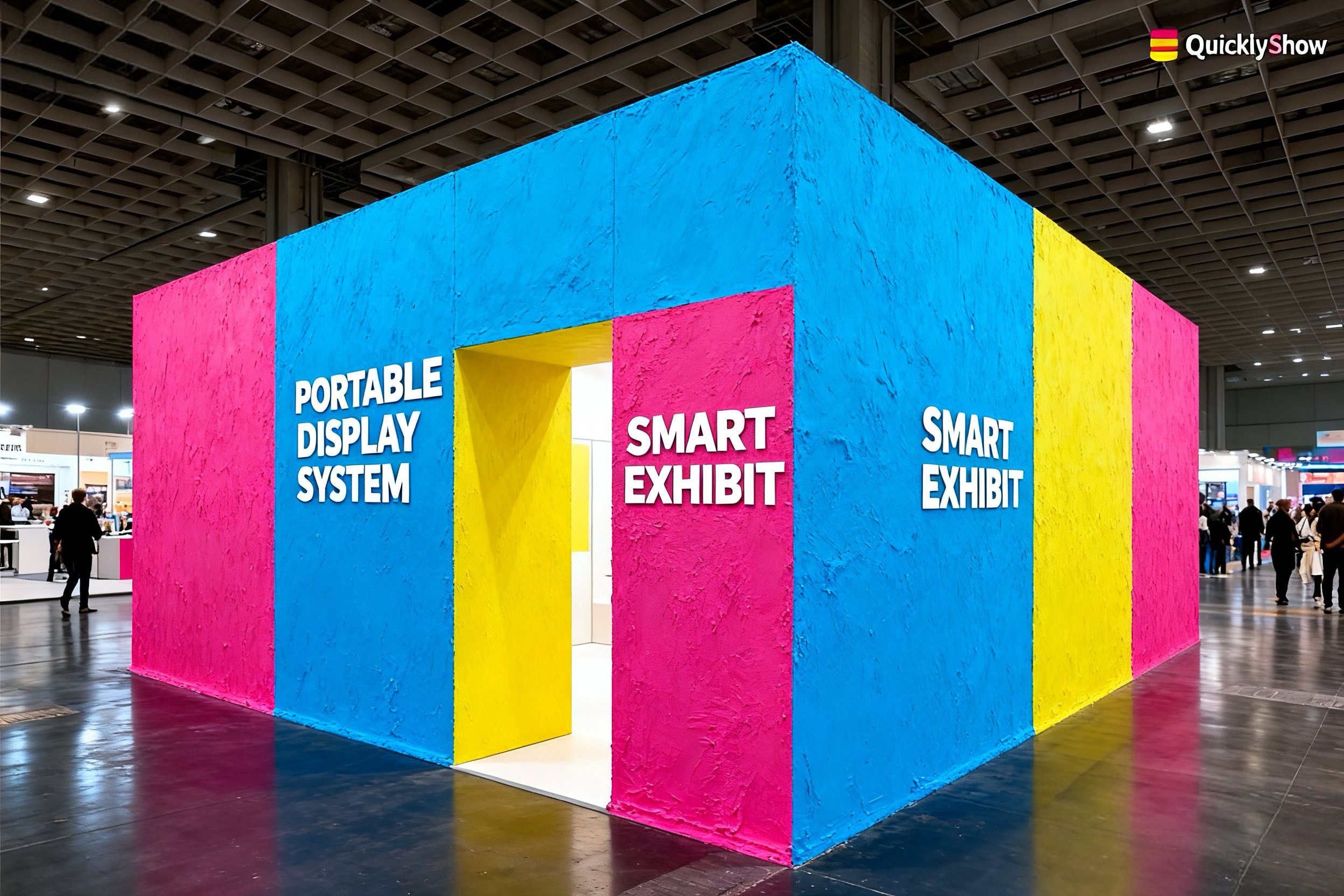
ALT: Tension fabric display wall with large seamless printed exhibition graphics
Main types of tension fabric displays
Pillowcase fabric backwalls
A sewn graphic sleeve slides over a tubular or sectional frame and closes with a zipper or other fastening method. It creates a clean, continuous surface and works well for straight or shaped backwalls.
Pop-up fabric displays
An expanding frame opens into position, often with the graphic remaining attached during packing when the design permits. This type prioritizes quick setup and compact storage.
Modular fabric booth systems
Multiple frames connect to form walls, corners, rooms or larger branded environments. Modules can support changing footprints and combine with counters, shelves or screens.
SEG fabric systems
A silicone strip sewn around the graphic fits into a frame channel. SEG can be front-lit or combined with LEDs for a backlit display. It offers precise edge-to-edge presentation but requires accurate sizing.
Fabric banner stands and towers
Narrow freestanding units add directional messages, product information or height. They are useful supporting elements but should not compete with the primary booth message.
Benefits of tension fabric stands
Compact transport. Textiles fold or roll into a smaller volume than many rigid graphic panels.
Large-format presentation. A single fitted graphic can cover a broad surface with few visible interruptions.
Replaceable branding. Hardware can remain in use while graphics change for new campaigns.
Lightweight structures. Aluminum tubes and frames can reduce handling effort compared with conventional construction.
Design versatility. Straight walls, curves, arches, counters and suspended shapes can use related fabric principles.
Understanding dye-sublimation printing
Dye-sublimation is commonly used for exhibition textiles because the color bonds with suitable polyester fabric. The process can produce vibrant, durable graphics with a softer handling profile than a rigid panel.
Results still depend on artwork quality, fabric selection, color management and finishing. Ask for the supplier’s template, resolution guidance, bleed and safe area. For exact brand colors, request a printed proof on the intended material.
How to choose the right display
Match the system to setup frequency
If the display travels every month, prioritize durable connectors, simple labeling, replaceable parts and protective cases. For an occasional local event, a simpler configuration may be sufficient.
Check finished and packed dimensions
Confirm assembled width and height, but also packed length, weight and number of cases. Long frame sections may create unexpected freight costs.
Evaluate graphic attachment
Ask to see the installation method. The graphic should fit smoothly without excessive force. Confirm whether it can remain attached for packing and how it should be folded or rolled.
Plan lighting
Front lights can emphasize a fabric wall; integrated LED lightboxes create backlit impact. Specify power availability and cable routes early.
Consider future replacement
Keep the frame model, finished graphic dimensions and artwork template. Ask how replacement graphics are ordered and whether color can be matched to earlier production.
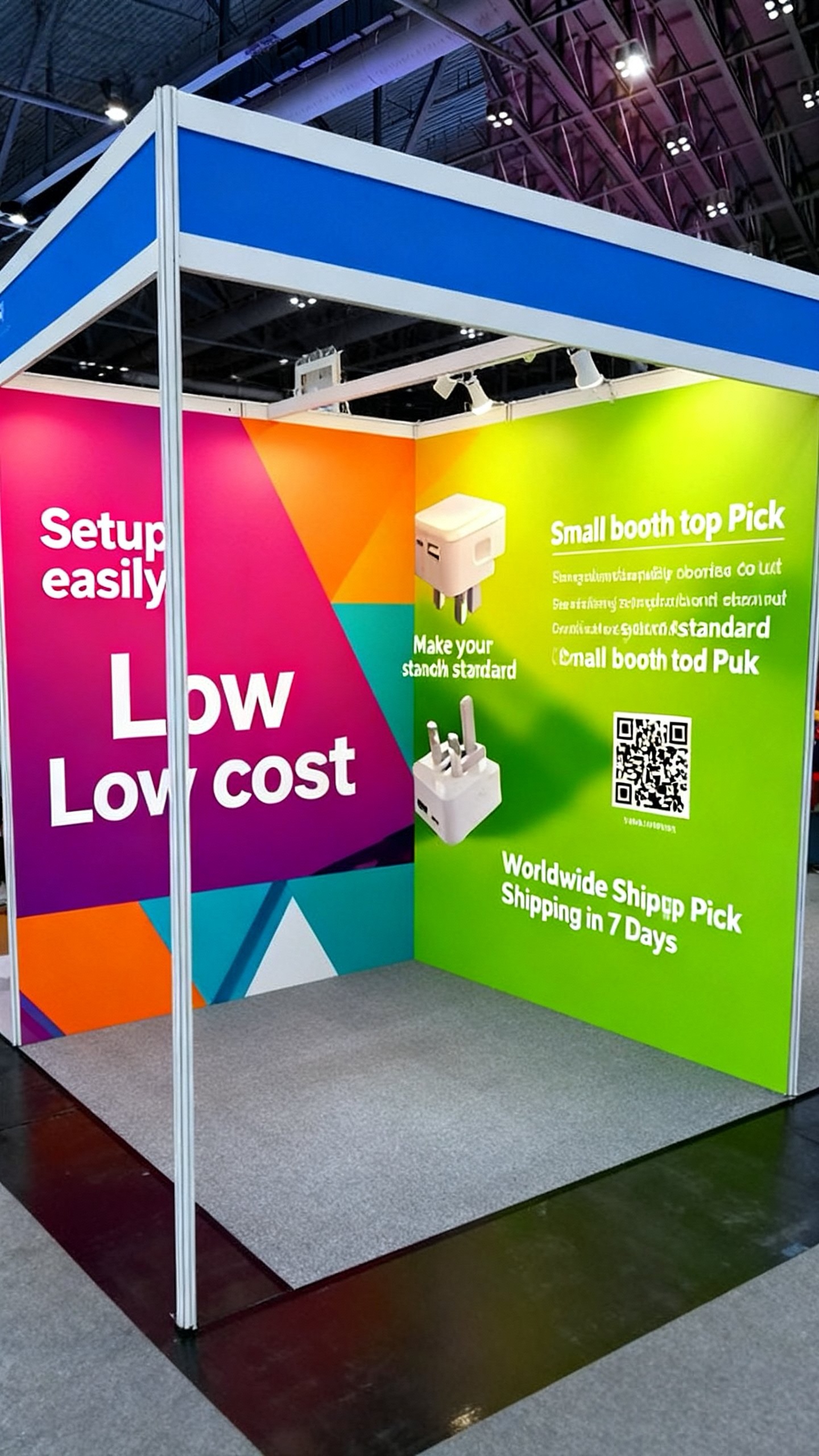
ALT: Custom printed tension fabric trade show booth with seamless branded graphics
Common problems and how to prevent them
Wrinkles: Allow fabric to relax after unpacking and follow approved care instructions. Correct tension and storage reduce persistent creases.
Graphic distortion: Keep important logos and text away from seams, corners and high-stretch areas using the supplier’s template.
Poor fit: Do not order replacement graphics using rough frame measurements. Use the exact system specification.
Visible frame lines: Choose suitable fabric opacity and check the display under intended lighting.
Color mismatch: Use color-managed files and proof brand-critical colors on the production fabric.
Care and reuse
Handle graphics with clean hands. Remove dirt according to the supplier’s fabric instructions and let every item dry completely before packing. Label each graphic and frame, and inspect zippers, silicone edges, seams and connectors after use. Avoid storing heavy hardware on top of printed textiles.
QuicklyShow tension fabric displays
QuicklyShow provides fabric display walls, modular booth configurations and related portable exhibition products. Projects can combine printed backwalls with counters, lightboxes and accessories. Share the footprint, desired shape and artwork needs to receive a configuration suited to transport and repeated use.
Frequently asked questions
Are tension fabric displays washable?
Some fabrics may be cleaned or washed under specific conditions, but inks, sewn elements and finishes vary. Follow the manufacturer’s care instructions.
Can I buy a replacement graphic without a new frame?
Usually, if the exact frame model and graphic dimensions are known. Confirm compatibility before printing.
Do tension fabric displays wrinkle?
They can crease in storage, but properly fitted fabrics are designed to smooth under tension. Packing method, material and care affect the result.
What artwork format should I provide?
Follow the supplied template. Vector files are preferred for logos and text; raster images need sufficient resolution at final size.
Related QuicklyShow resources
- Explore a U-shaped tension fabric backdrop.
- See a 10×20 modular tension fabric booth.
- Review a portable 10×10 modular fabric booth.
- Read the portable booth complete guide.
- Request a tension fabric display quote.
Choose the complete system, not only the print
Ask QuicklyShow for a proposal that defines the frame, fabric, print method, finishing, packed size, case and replacement-graphic process. These details determine how well the display performs after the first event.
