
No products in the cart.
Replaceable Fabric Graphics vs. Disposable Booths: Which Costs Less Over Time?
At the first event, a disposable booth can appear inexpensive. By the fifth event, the comparison may look different: one exhibitor has rebuilt several structures, while another still uses the same aluminum frame and replaces only campaign-specific fabric graphics.
The right answer depends on the complete event calendar, not the print price alone.
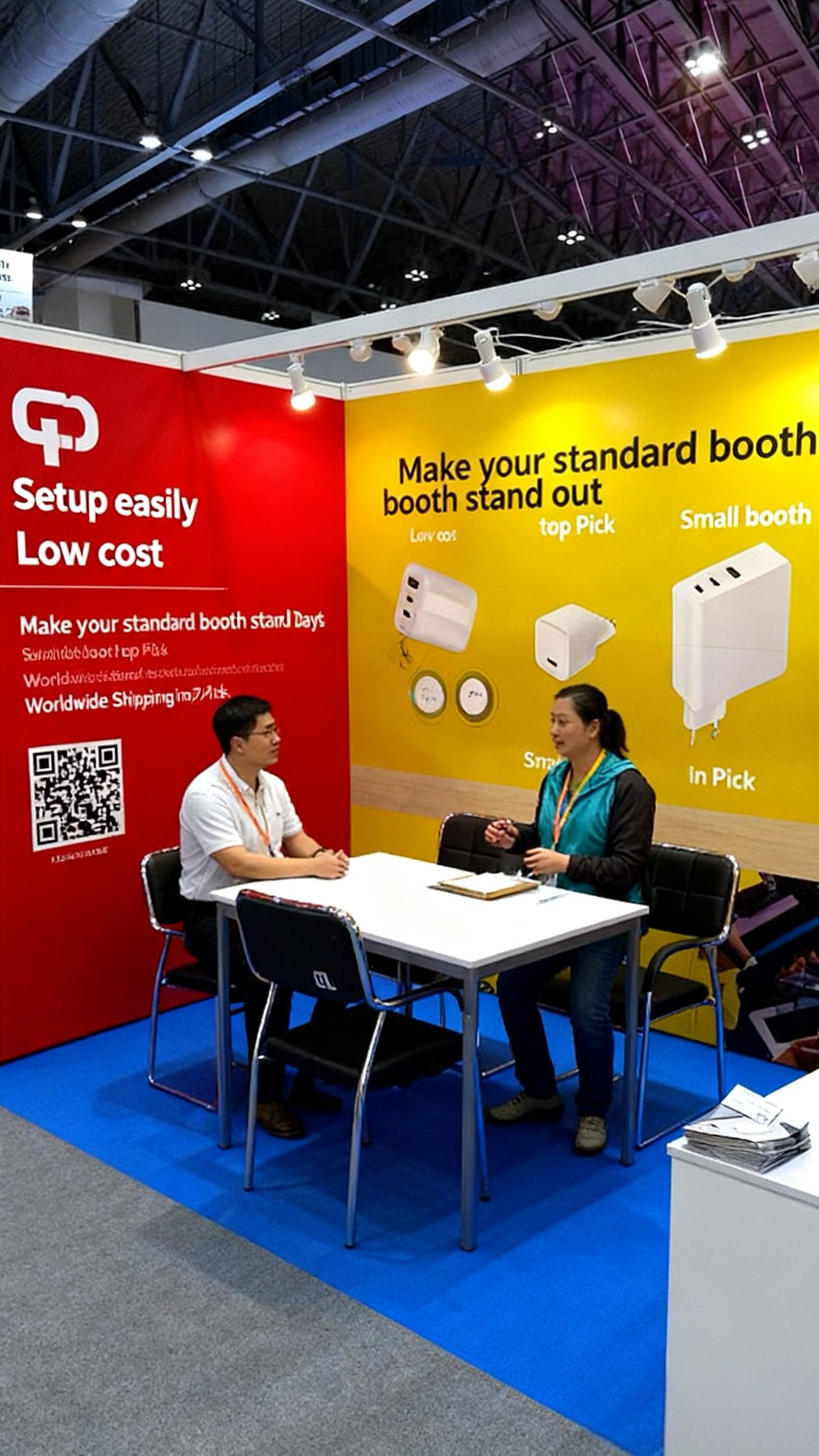
Compare total cost per event
Use this model:
Cost per event = (hardware + graphics + freight + storage + labor + repairs + disposal) / number of events
A reusable frame has a higher initial hardware cost than a printed surface alone, but its cost can be spread across repeated uses. Disposable construction may reduce storage but adds rebuilding, venue work and disposal to each event.
What changes when only the graphic is replaced?
The frame, feet, connectors, lights, cables and packing stay in the inventory. A new dye-sublimated stretch graphic or SEG fabric is produced for the revised artwork. This works well when the booth dimensions and attachment method remain unchanged.
QuicklyShow uses high-definition dye-sublimation printing on elastic, wrinkle-resistant fabric for selected tension-fabric systems. Accurate cutting helps the graphic fit the specified frame, but buyers should always confirm the artwork template and finishing method before reordering.
A hypothetical five-event comparison
Assume a reusable system costs more at the first show but requires only new graphics at later events. A disposable alternative is rebuilt each time. Add real quotations for:
| Cost item | Reusable frame | Disposable booth |
|---|---|---|
| Initial structure | Once | Every event |
| New campaign graphics | As needed | Usually included in rebuild |
| Installation labor | Repeated assembly | Repeated fabrication/setup |
| Storage | Between events | Often lower |
| Disposal | Damaged/replaced items | Potentially substantial each event |
| Repair | Individual parts | Often not applicable |
Do not assume the reusable option always wins. A company attending one event with no storage plan may reach a different conclusion from a frequent exhibitor attending ten shows.
Follow one frame through three campaigns
Consider a cosmetics brand that launches a spring product, attends a summer distributor meeting and introduces holiday packaging at the final show of the year. The aluminum backwall dimensions remain unchanged. The company orders three campaign graphics, while the frame, feet, connectors and transport bag stay in service.
The value is not only the avoided structure purchase. The installation team becomes familiar with the same hardware, spare parts remain relevant and packed dimensions are predictable. On the other hand, the exhibitor must store the frame and protect each graphic between events. Those real operating costs belong in the comparison.
Ask the supplier to quote the first complete system and a replacement graphic separately. Then add outbound and return freight, storage, installation time and expected repair parts. This turns a broad “reusable is cheaper” statement into a decision the purchasing team can audit.
When a graphic should be replaced
- the campaign, logo, language or product changes;
- the fabric is stained, torn or permanently stretched;
- silicone edging or zippers no longer hold correctly;
- color no longer matches adjoining panels; or
- the new frame dimensions are not compatible.
Reconfiguration can extend the investment
A 10×10 booth can contribute modules to a later 10×20 design, but the larger layout normally needs additional materials. A 10×20 inventory can also be reduced for a 10×10 space by storing selected modules. The reusable value comes from retaining compatible components, not pretending that one small kit covers every floor plan.
Frequently asked questions
Can one fabric graphic fit different frames?
Only when the dimensions, attachment and tension are compatible. Small frame differences can affect the finished appearance.
How should graphics be stored?
Clean and fully dry them, protect them from sharp profiles and moisture, and follow the supplier’s folding or rolling method.
Are replaceable graphics automatically recyclable?
No. Textile composition, silicone edging, zippers, inks and local facilities affect the recovery route. Replaceability primarily keeps the frame in use.
Calculate with your real event calendar
Start with the next 12–24 months rather than an idealized lifetime. Mark which events can use the same frame, which need a new language or campaign graphic and which require additional modules. The answer becomes clearer when each change has a date and price.
Read Reusable Aluminum Booth Lifespan and Graphic Replacement and contact QuicklyShow for frame and replacement-graphic pricing based on the actual dimensions.
